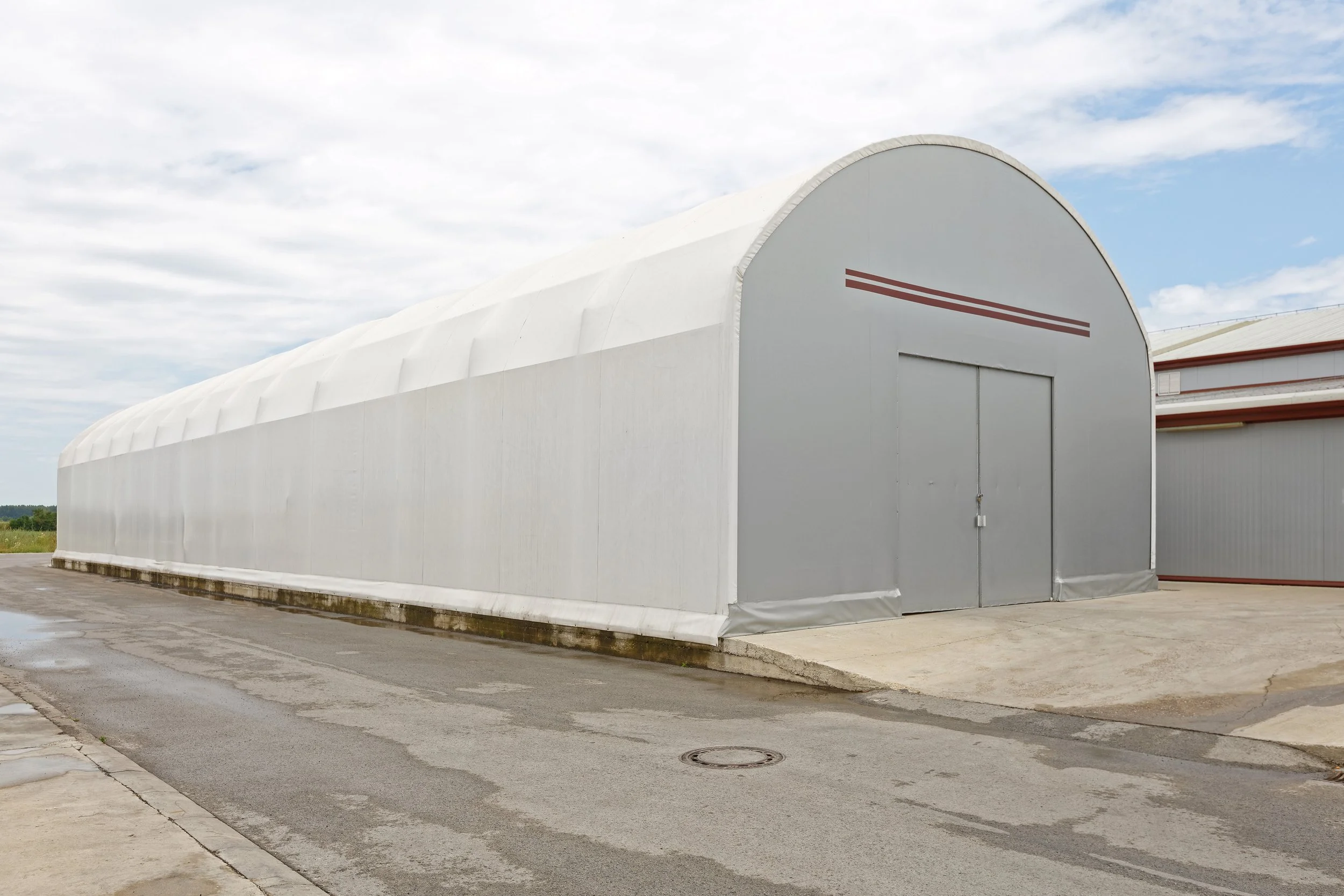
Tension Fabric Buildings
Tension fabric building projects often require careful structural review to support unique geometry, loading behavior, and project-specific support conditions.
MSC helps clients save time by providing engineering support that brings clarity to the structural path forward and reduces unnecessary coordination during design, permitting, and project planning.
We understand the value of time, particularly for clients working under delivery pressure or managing multiple stakeholders. Our goal is to support smoother execution with practical engineering that fits the project rather than slowing it down.
Interested?
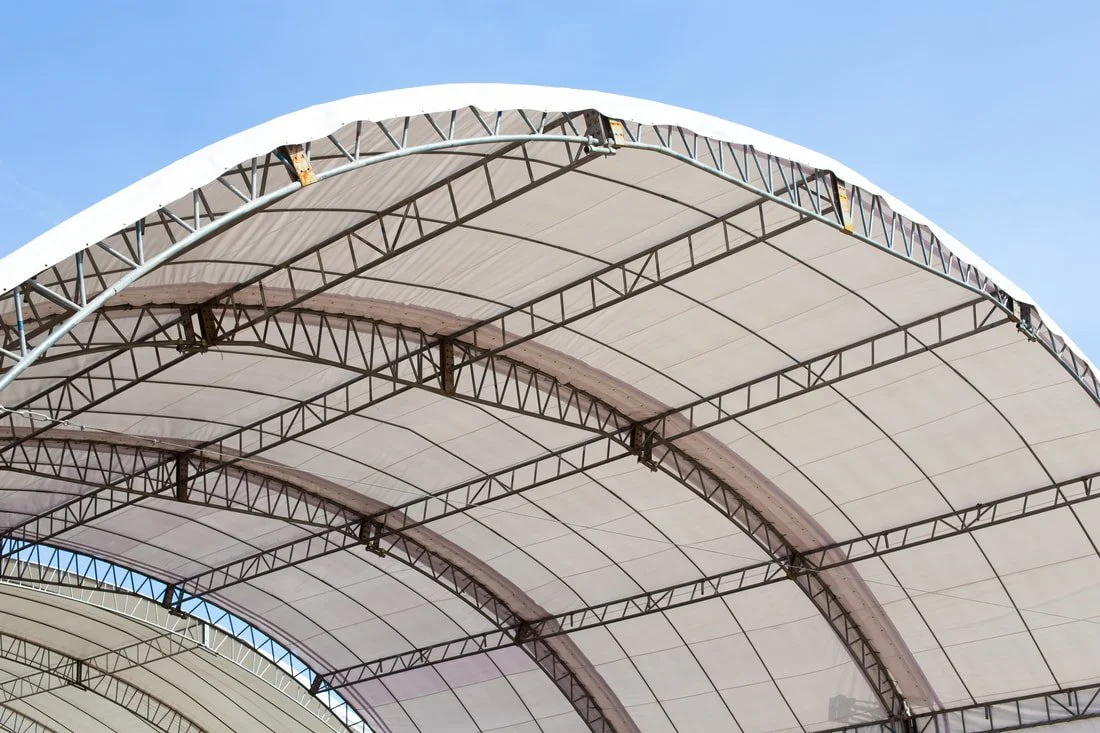
Detail of arched steel truss system supporting the fabric membrane, illustrating load transfer, connection design, and stiffness requirements for long-span applications.
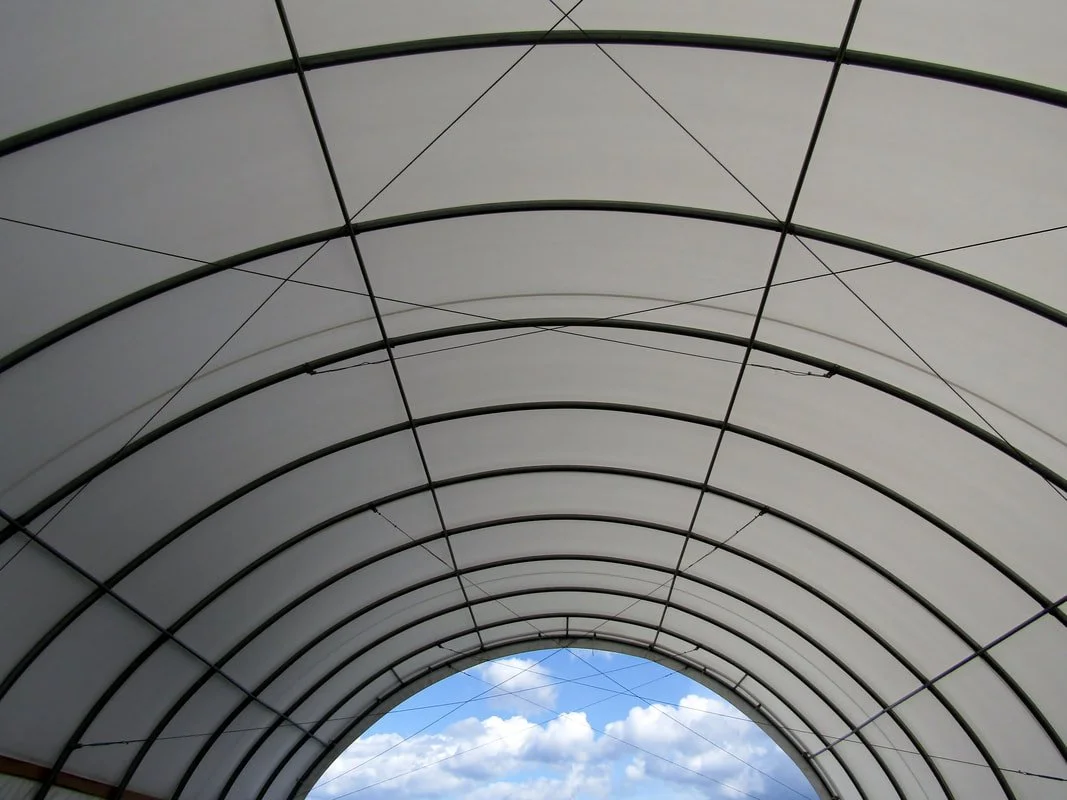
Interior view of tensioned membrane showing uniform curvature and pre-stressed fabric behavior essential for resisting wind uplift and maintaining structural stability.
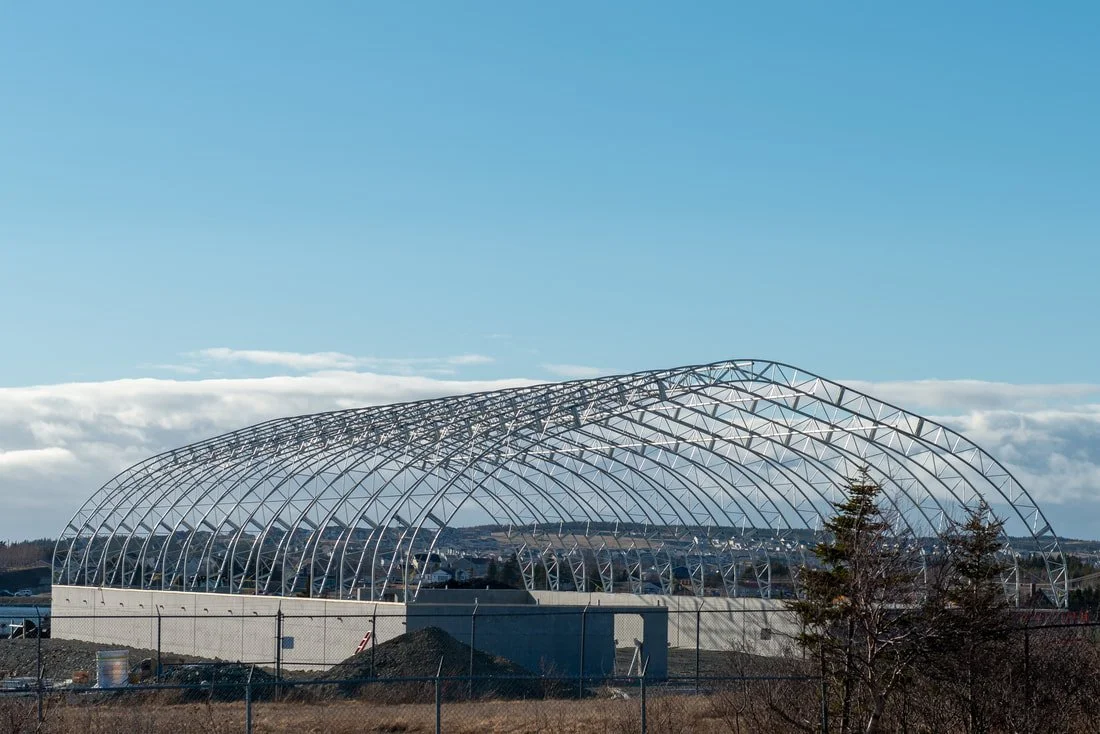
Primary steel arch framing system prior to membrane installation, highlighting the structural skeleton responsible for resisting gravity and lateral loads.
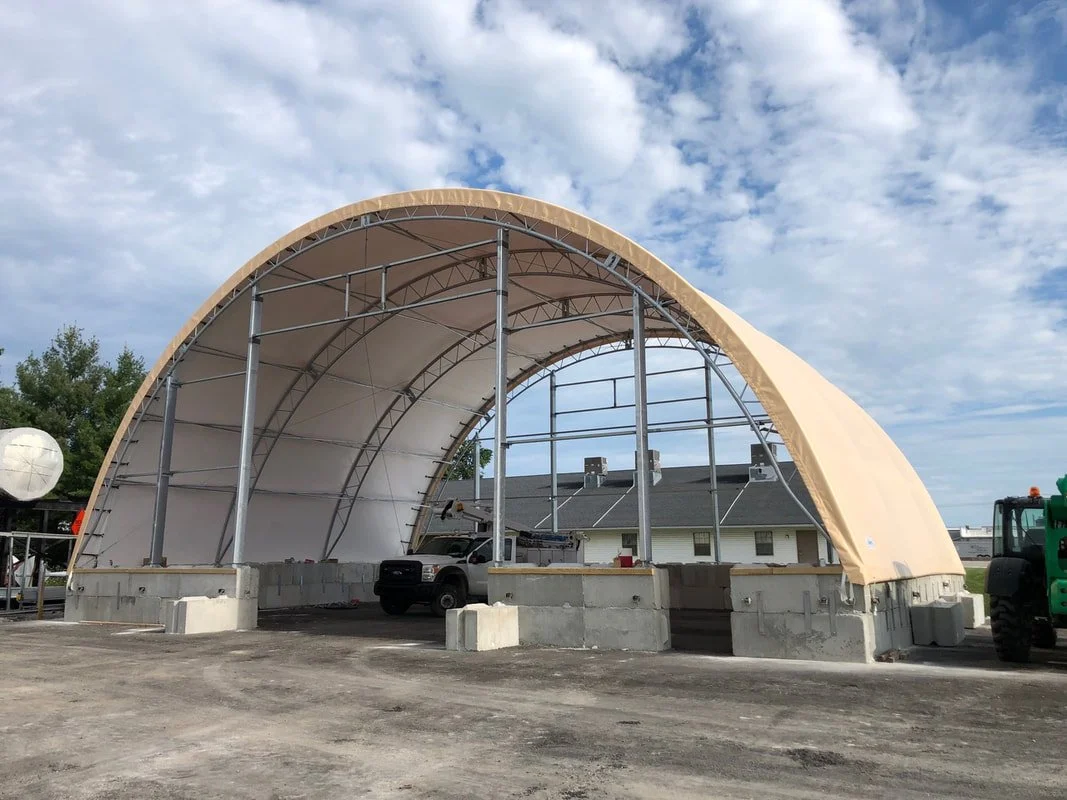
Fabric structure during construction phase, demonstrating sequencing of steel erection, anchorage, and membrane installation for controlled structural performance.
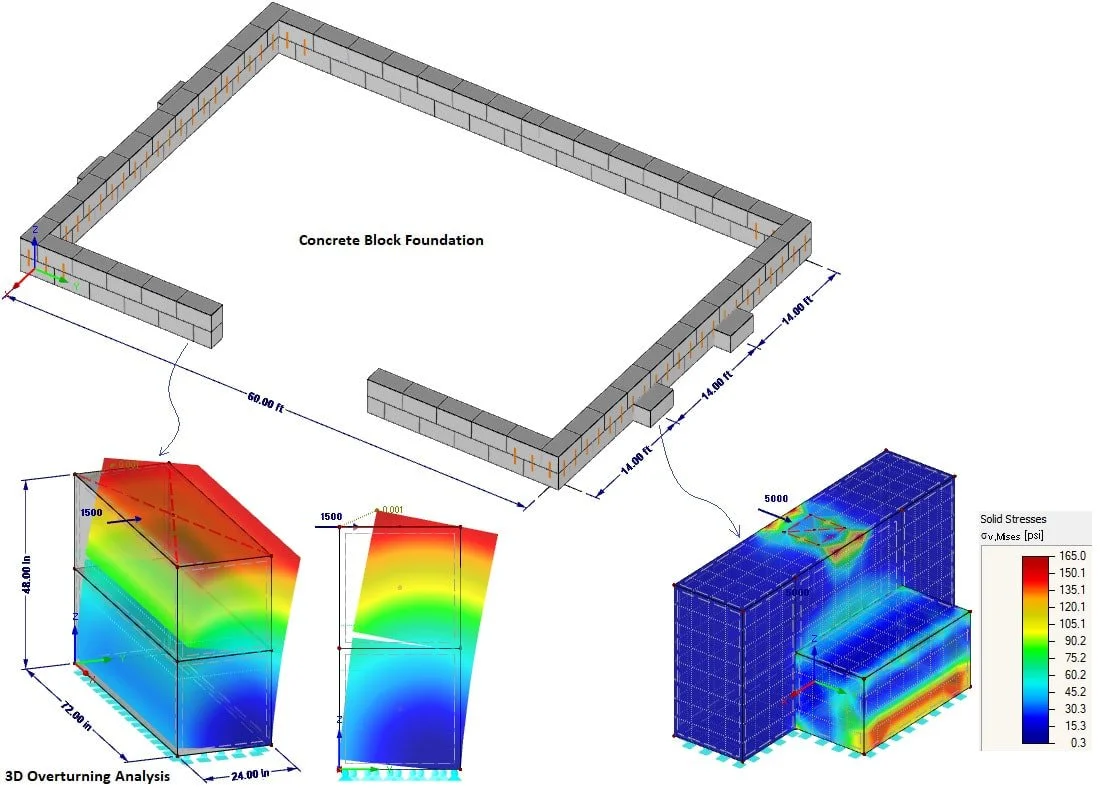
Foundation and overturning analysis evaluating base reactions, lateral stability, and anchorage demands under combined wind and structural loading conditions.
Our Design Capabilities
We design tension fabric buildings which made of steel frame trusses or single tube frames, covered with high density polyethylene fabric membranes. Tension fabric buildings are often referred to as fabric structures, fabric shelters, cover-all buildings, fabric buildings, hoop buildings, quonset huts, tent buildings, tarp buildings and canvas buildings. Tension fabric buildings are used for many applications and industries such as agricultural, recycling, mining, gas & oil facilities, equestrian, as well as government facilities: salt storage buildings, public works, athletics, schools, park & recreations, aviation and military. We design tension fabric buildings foundation systems, including concrete spread footing, wall footing, drilled pier, drilled shaft footing as well as concrete block foundation systems.
Tensile fabric buildings are often selected because they can cover large areas efficiently, create clear-span space, and be installed faster than many conventional building systems. But even when the enclosure looks simple, the structural behavior is not.
These buildings rely on the interaction between steel framing, support conditions, anchorage, and the tensioned membrane itself. Wind uplift, lateral load transfer, frame stiffness, foundation demand, and overall stability all play a major role in how the structure performs. That means the structural design has to account for more than just the visible frame. It must also reflect how the full system behaves under real loading conditions.
Practical structural support for fabric-covered buildings, long-span enclosures, and membrane-supported structures
Why tensile fabric buildings need special attention
Unlike conventional enclosed buildings, tensile fabric structures often depend on geometry, curvature, membrane tension, and frame interaction to achieve stability and performance.
This becomes especially important when the project includes:
long clear spans
exposed open-sided conditions
arched or custom steel framing
large wind-exposed surfaces
nonstandard support spacing
partial enclosure conditions
equipment or door openings at end walls
unusual anchorage or foundation systems
In these cases, structural performance depends on how the entire enclosure system works together, not just on the strength of one member alone.
Why this structure type benefits from practical engineering review
Tensile fabric buildings benefit from structural review that reflects the actual building configuration, exposure, and support condition.
Practical engineering review helps clarify:
how wind loads act on the building form
where the governing reactions occur
how much overturning demand must be resisted
whether the support framing is stiff enough for the intended span
what anchorage and foundation system is needed
how the enclosure performs as a full structural system
The value is not only in checking the frame. It is in understanding the interaction between the frame, membrane, supports, and foundations.
Projects where structural review especially valuable
Structural review is especially useful for tensile fabric buildings with:
wide clear spans
exposed or high-wind locations
tall sidewalls or end-wall openings
partial enclosure conditions
custom foundations or support layouts
industrial equipment stored under the enclosure
nonstandard building geometry
projects where anchorage demand controls the design
The more site-specific the exposure and support condition, the more important project-specific analysis becomes.
A practical fit for tensile fabric building projects
Tensile fabric buildings need engineering that is technically disciplined but still practical to apply in the field. Good structural support helps clarify the frame behavior, support reactions, wind response, anchorage demand, and foundation needs without overcomplicating the project.
That means focusing on:
realistic wind and gravity loading
practical frame behavior
clear support reactions
foundation and overturning demand
anchorage requirements
structural solutions that fit fabrication and installation realities
For tensile fabric buildings, good engineering support helps turn a lightweight enclosure concept into a better-understood structural system.
Planning a tensile fabric building project?
Share your layout, span, support condition, and project criteria so the structural scope can be reviewed clearly and efficiently.