
Specialty Modular Structures

Specialty modular structures often involve uncommon conditions, custom configurations, and project-specific constraints that can slow decision-making and add complexity to the engineering process. Many of these projects also involve proprietary designs that call for a high degree of trust, discretion, and professional integrity.
MSC provides practical structural engineering support that helps reduce unnecessary coordination, improve clarity, and support more efficient teamwork across the project team. We understand the importance of both time and trust, and we work to simplify the engineering path so clients can stay focused on execution, delivery, and long-term business growth.
Interested?
Sneak Peek of Our Specialty Modular Structures
See how specialty modular structures are studied through pressure mapping, wind analysis, and structural performance evaluation.

Integrated analysis of tensile architectural structures combining wind tunnel simulation, pressure mapping, and membrane behavior to evaluate performance under complex environmental loading.
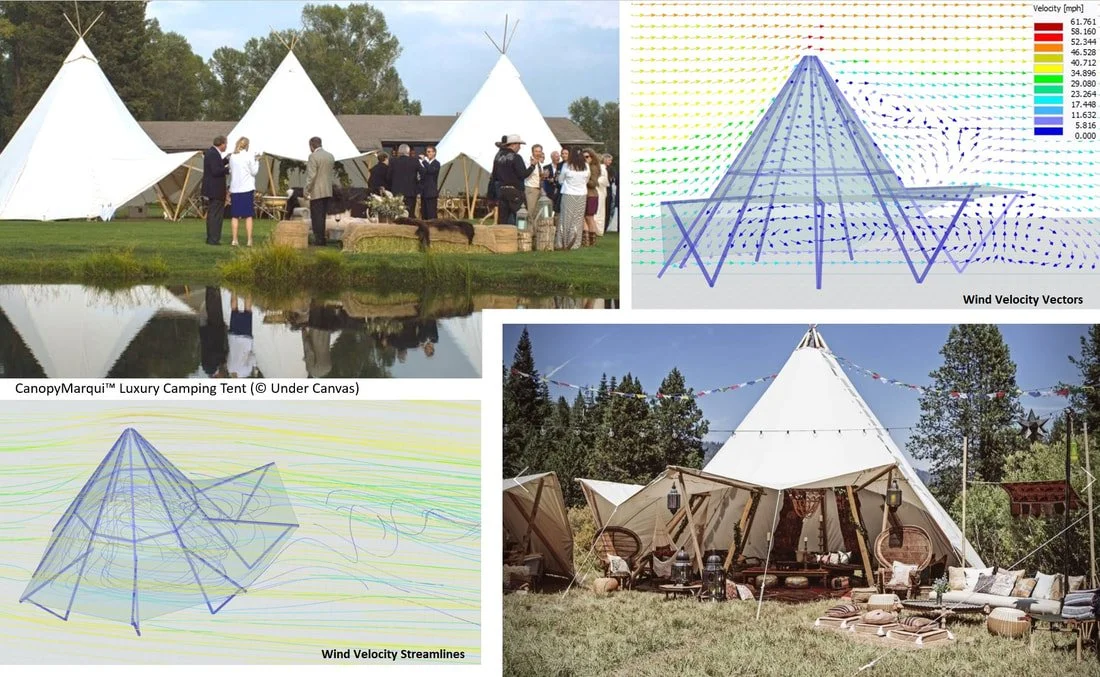
Wind flow visualization and structural modeling of tent-based modular systems, illustrating airflow interaction, stability response, and load distribution across lightweight framed assemblies.
Structural support for non-standard modular systems and custom-engineered configurations
Not all modular projects follow a standard box, layout, or loading condition. Specialty modular structures often combine unique geometries, unconventional framing, or project-specific requirements that fall outside typical modular design assumptions.
These projects require a more focused structural approach, where engineering is tailored to the actual configuration rather than applied from standard templates.
What defines a specialty modular structure
Specialty modular structures are typically characterized by one or more of the following:
non-uniform module sizes or layouts
mixed structural systems (steel, wood, hybrid)
partial modules or open-frame configurations
irregular stacking or offset conditions
custom load paths due to architectural requirements
integrated platforms, stairs, or access systems
modules supported on independent structural frames
projects requiring adaptation of standard modules for new uses
These conditions often create load paths and behaviors that differ significantly from conventional modular buildings.
Working on a non-standard modular project?
Share your layout, module configuration, and project constraints so the structural scope can be reviewed clearly and efficiently.