
Industrial Modular Buildings
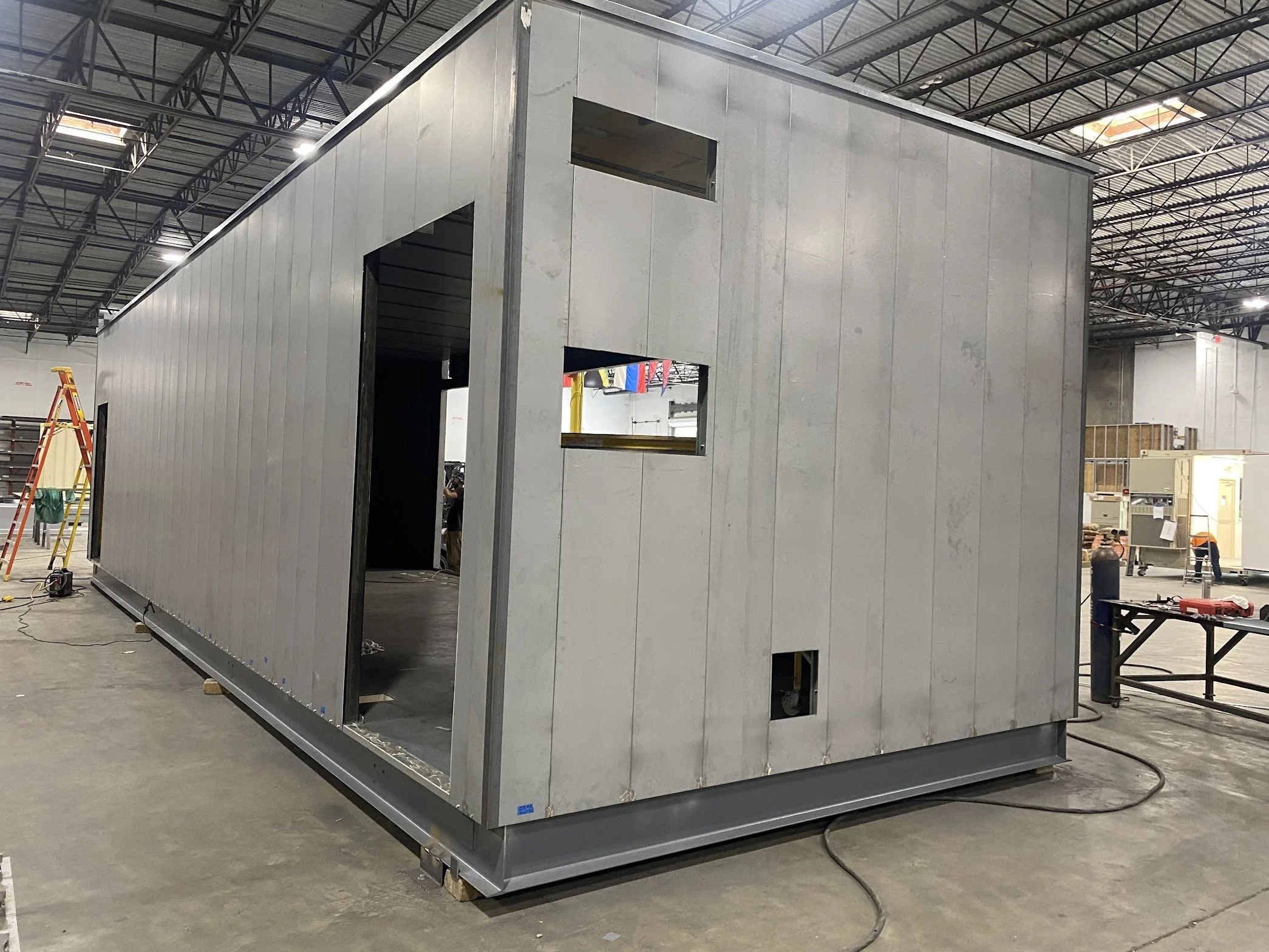
Industrial modular buildings often involve specialized equipment, site-specific loading, and demanding project requirements that can slow progress when structural questions are not addressed early.
MSC deliverables helps clients bring greater clarity to these projects with practical engineering support that reduces unnecessary back-and-forth and supports more efficient coordination across the project team.
We understand the value of time, especially when industrial projects are tied to procurement schedules, operations, and critical delivery milestones. Our approach is focused on helping clients move faster while reducing avoidable risk.
Interested?
Our Design Capabilities
We design industrial modular buildings made of interlocking metal panel system and steel framings for gas and oil field buildings, analyzer shelters, field laboratories, control buildings, operator shelters, split buildings, switchgear buildings, remote instrument enclosures and generator sets enclosure buildings. Design and analysis per AISC and AISI steel codes. We also perform building lifting analysis, support reactions and foundation designs.
Sneak Peek of Our Industrial Modular Building Projects
A visual overview of how industrial modular buildings are developed, analyzed, and brought into real use through structural modeling, wind study, stress review, and completed field installation.
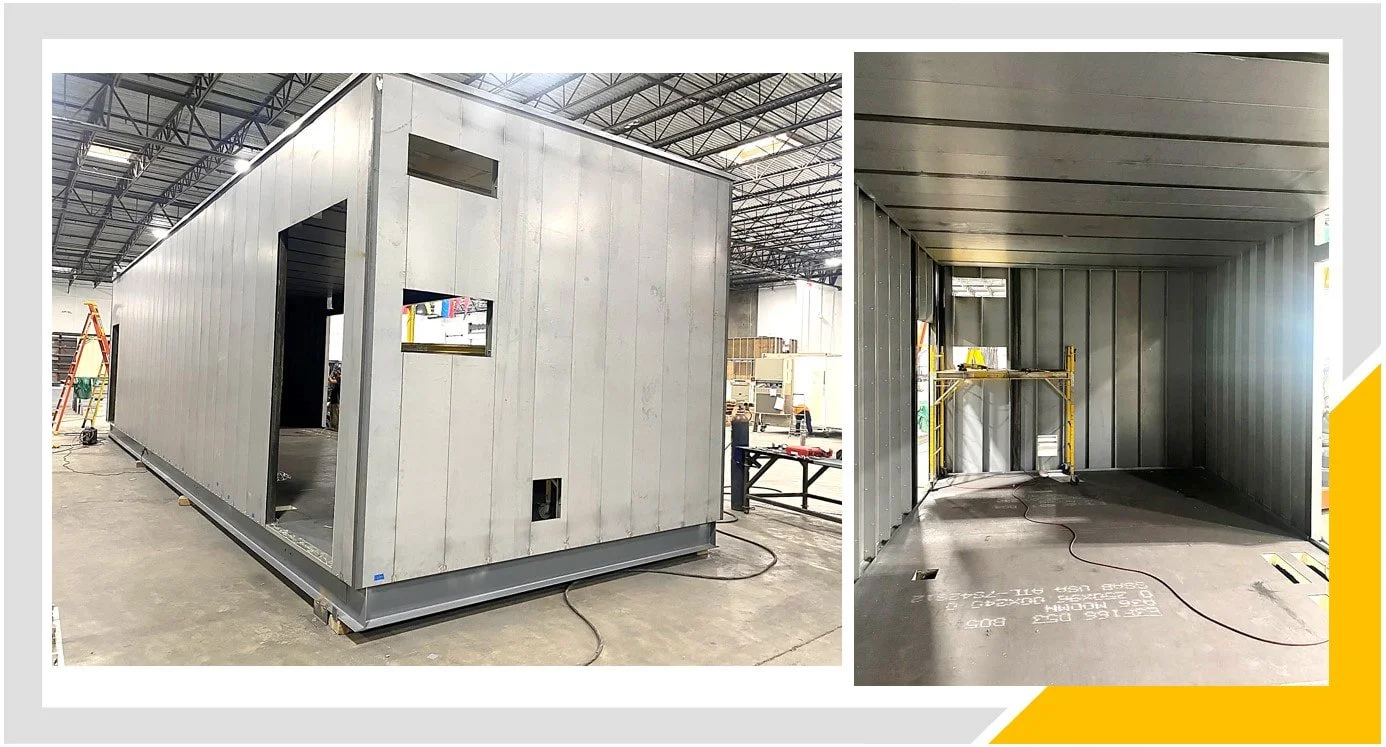
Fabricated industrial modular unit in production, showing structural wall panels and framed openings integrated into a transportable steel module.
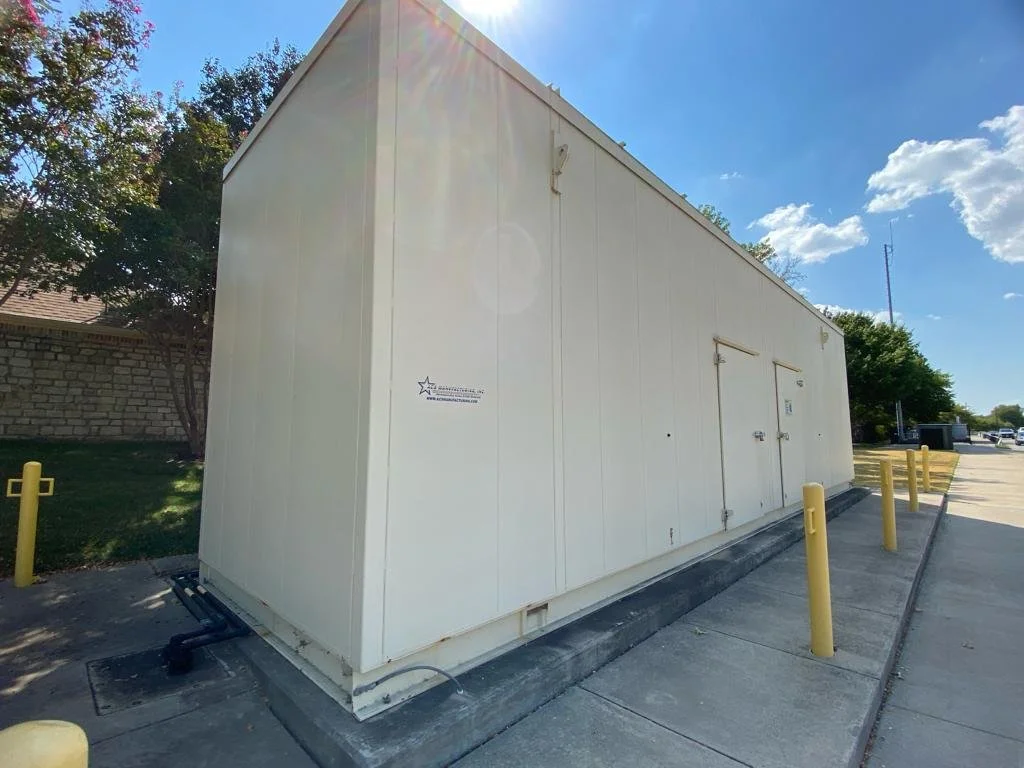
Completed industrial modular building installed on-site, demonstrating final assembly, foundation interface, and utility integration conditions.
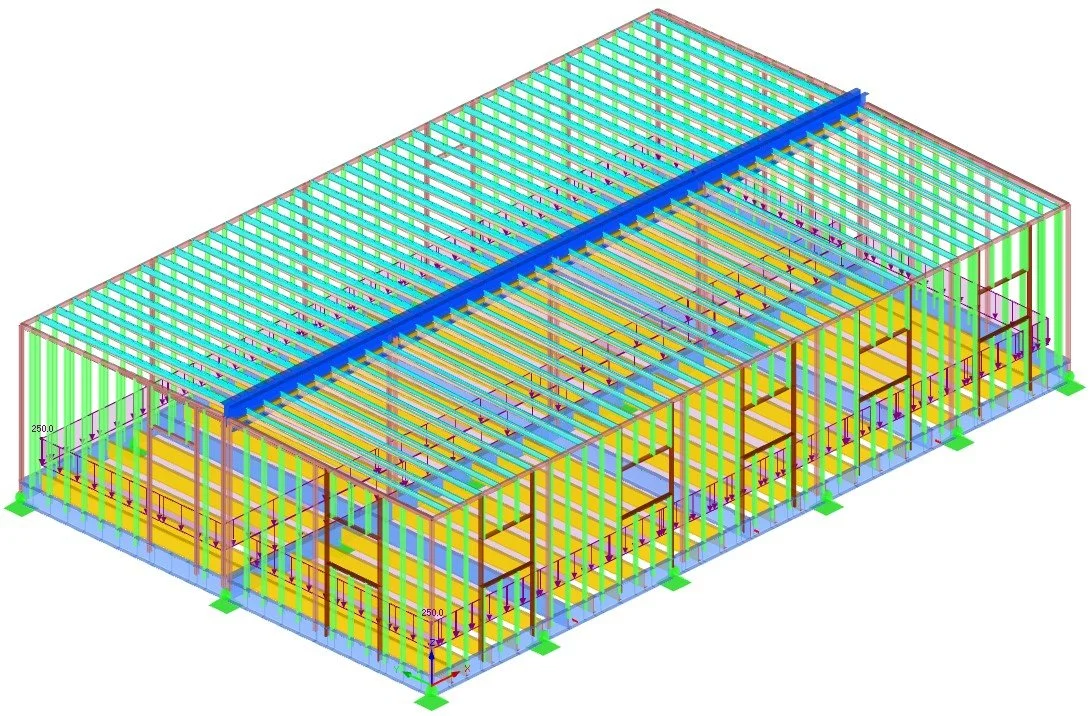
3D structural model of industrial modular building system, illustrating load paths, framing layout, and distribution of gravity and lateral forces.
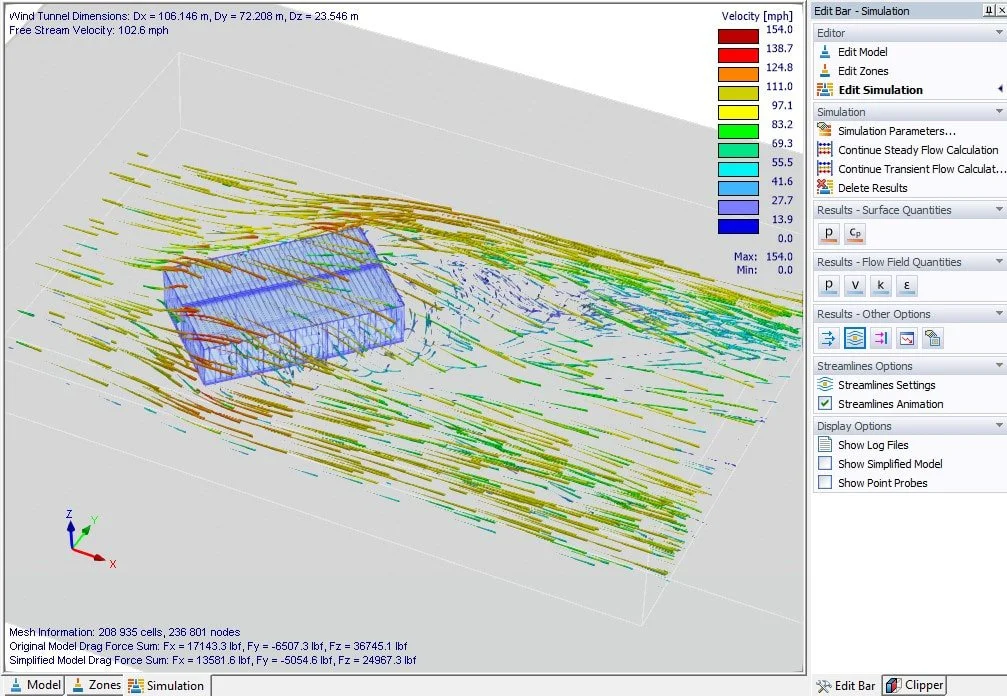
Digital wind tunnel simulation showing airflow behavior around modular structure, used to evaluate wind-induced forces and pressure zones.
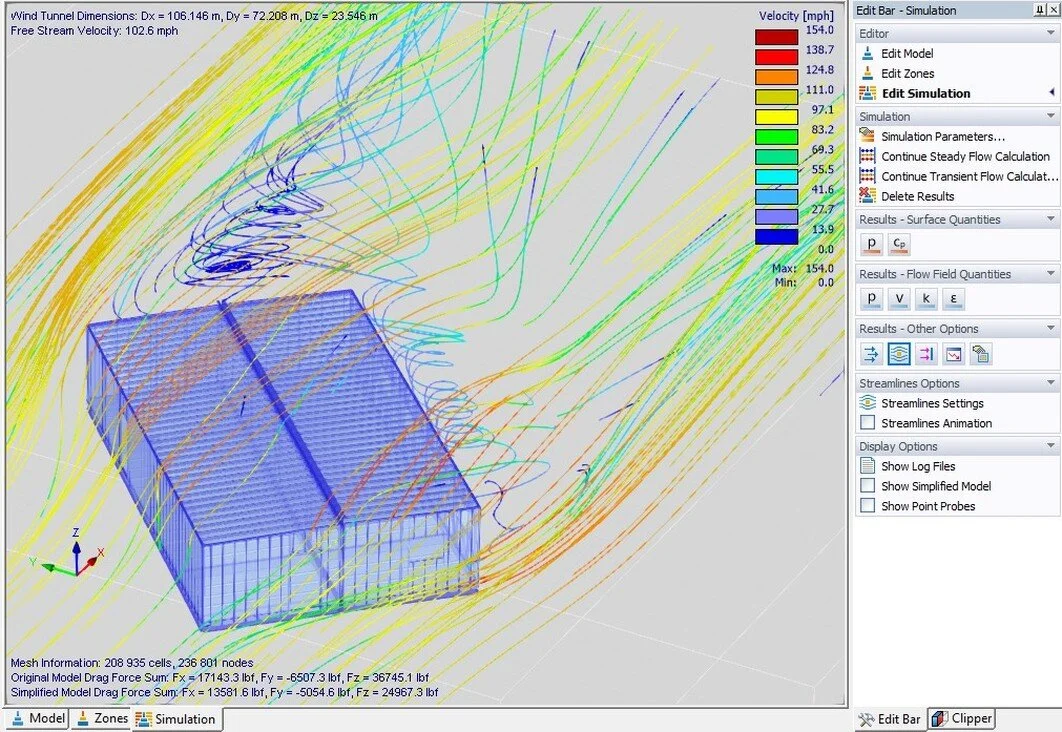
Detailed airflow visualization highlighting localized turbulence and flow separation effects impacting building surfaces and structural demand.
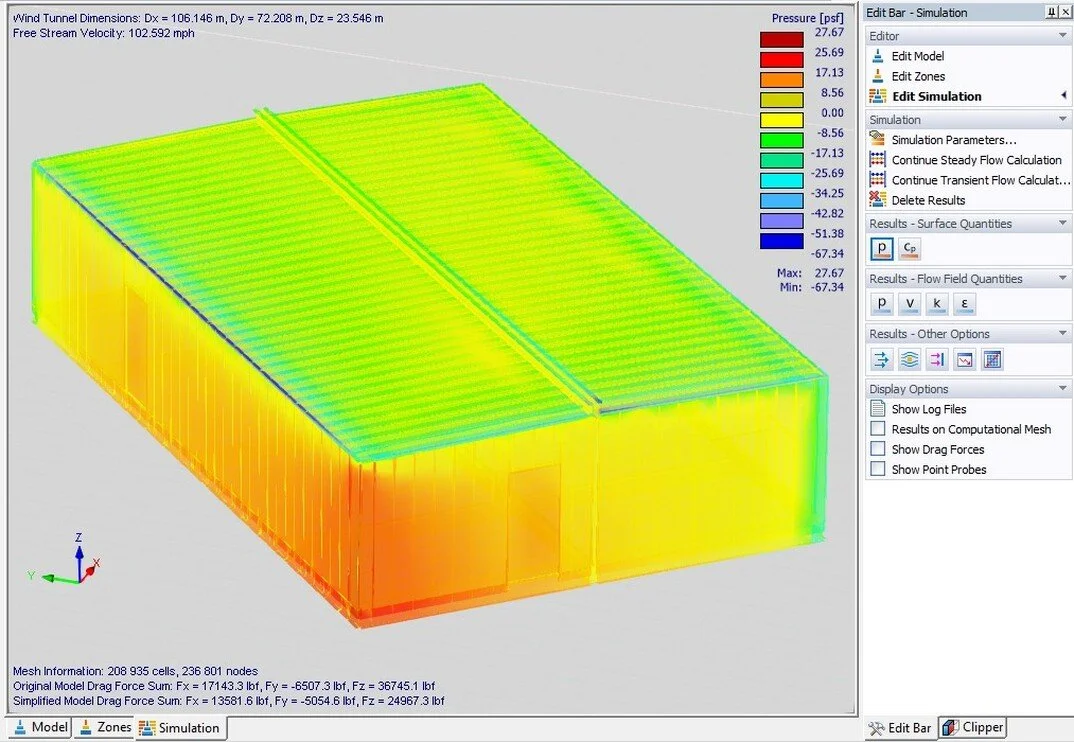
Wind pressure contour analysis indicating positive and negative pressure distribution across wall and roof surfaces under design wind conditions.
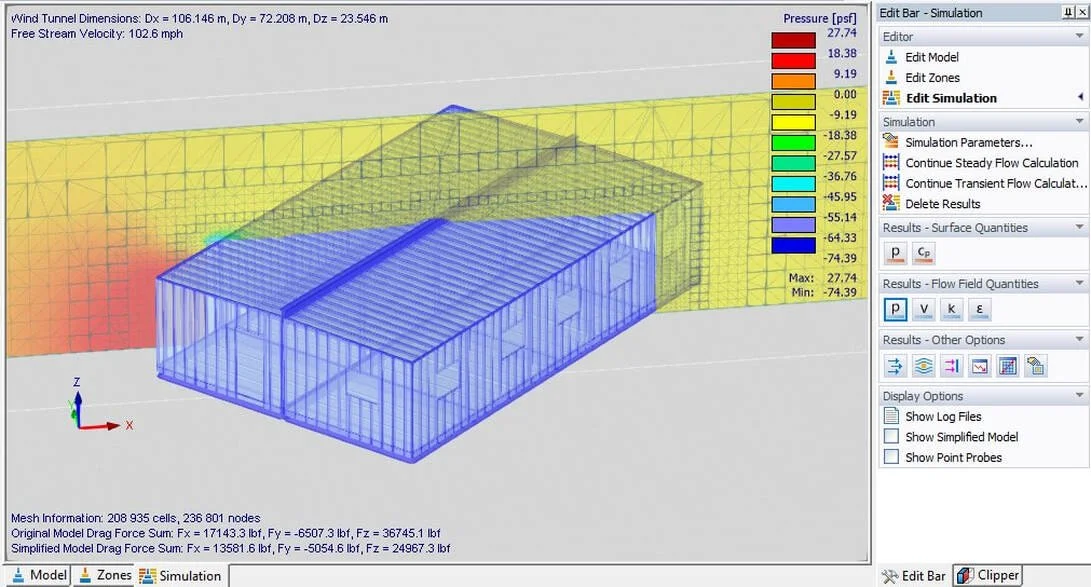
Surface pressure mapping of modular building envelope, supporting accurate load application for structural analysis and design validation.
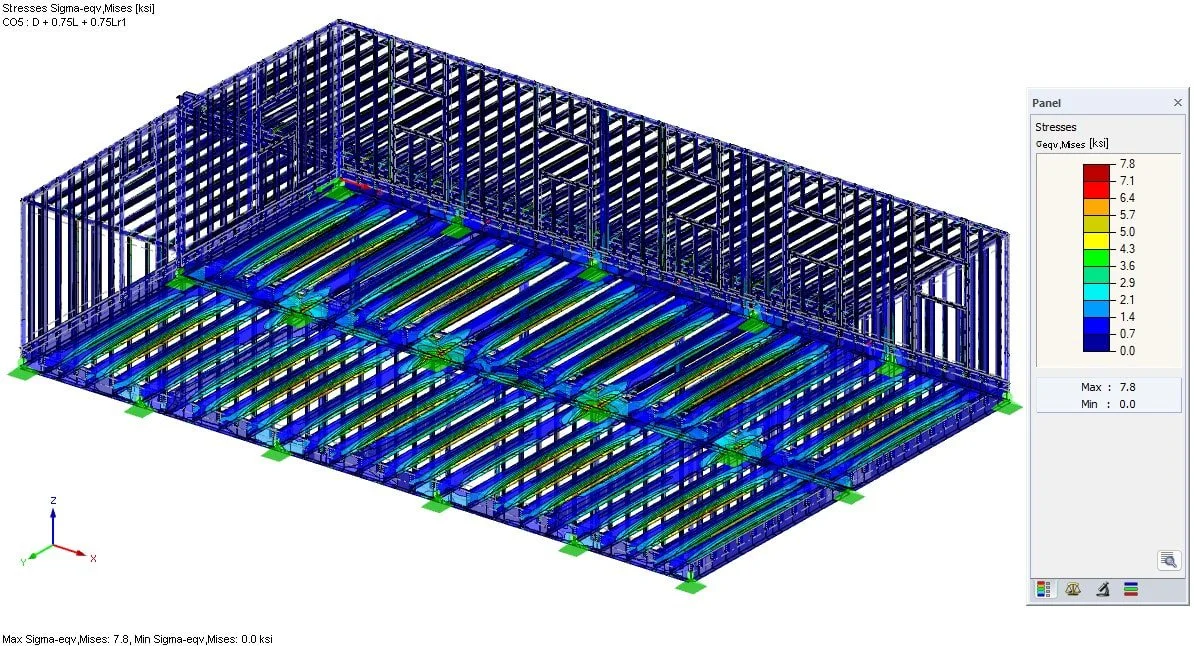
Finite element stress analysis of floor framing system, identifying critical load transfer zones and member utilization under combined loading.
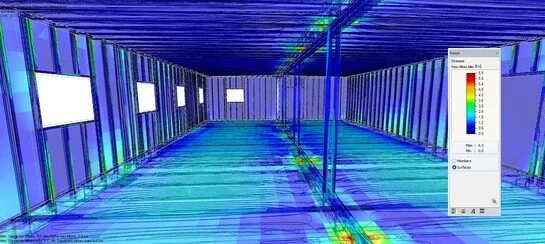
Interior structural response visualization showing deflection and stress distribution within modular framing under service and design load cases.