
Modular Buildings
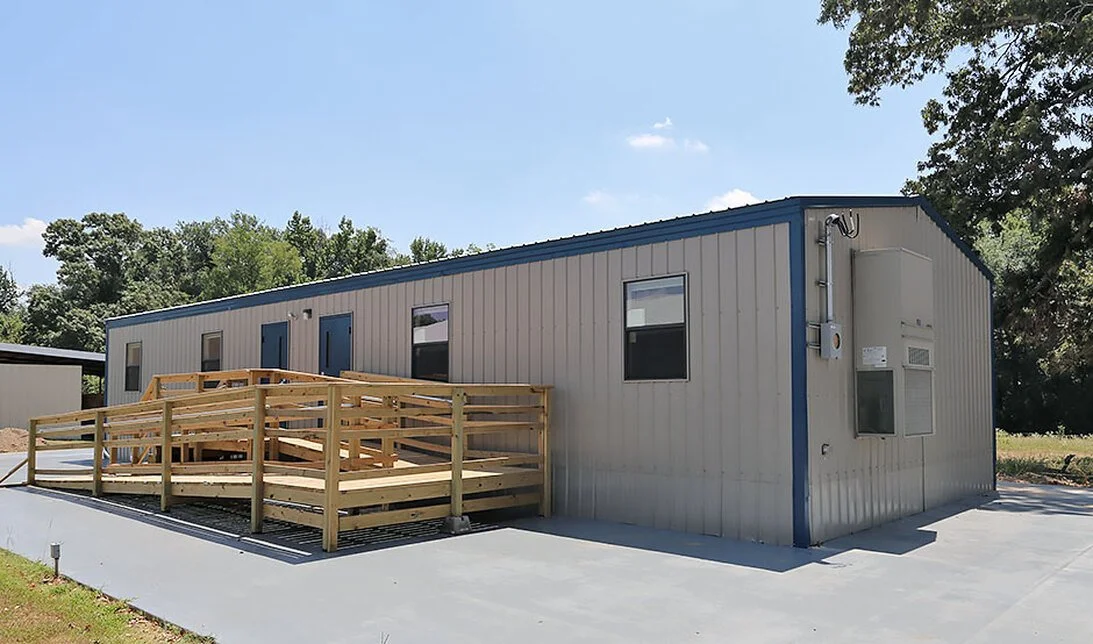
Modular building projects move fastest when structural engineering supports the realities of design, production, permitting, and installation from the start.
MSC helps clients reduce unnecessary coordination, avoid redesign risk, and keep projects moving with project-specific structural support tailored to the intended application and jurisdiction. We understand the value of time in modular construction, where delays can affect approvals, production schedules, and delivery commitments.
Our goal is to provide clear engineering support that helps clients move forward with greater confidence and less friction.
Interested?
Our Design Capabilities
We have developed significant expertise in designing modular building structural systems. We are proficient with the structural engineering provisions of the International Building Code, including generating building design loads: dead, live, snow, wind and seismic per ASCE 7. We design roof rafter, wall, and floor joist with sawn dimension lumbers per NDS, US wood structure design code. We do glulam beam design, LVL members design, ridge beam design per APA plywood design specification Supplement 5 Design and Fabrication of All-Plywood. We design conventional as well as specialized foundation systems for modular buildings, including wall footing, spread footing, CMU blocks or steel jack stands with ABS pads and ground anchor tie-down systems.
Sneak Peek of Our Modular Building Structural Analysis
A closer look at how modular buildings are evaluated—from framing behavior and load paths to transport conditions and real-world performance.
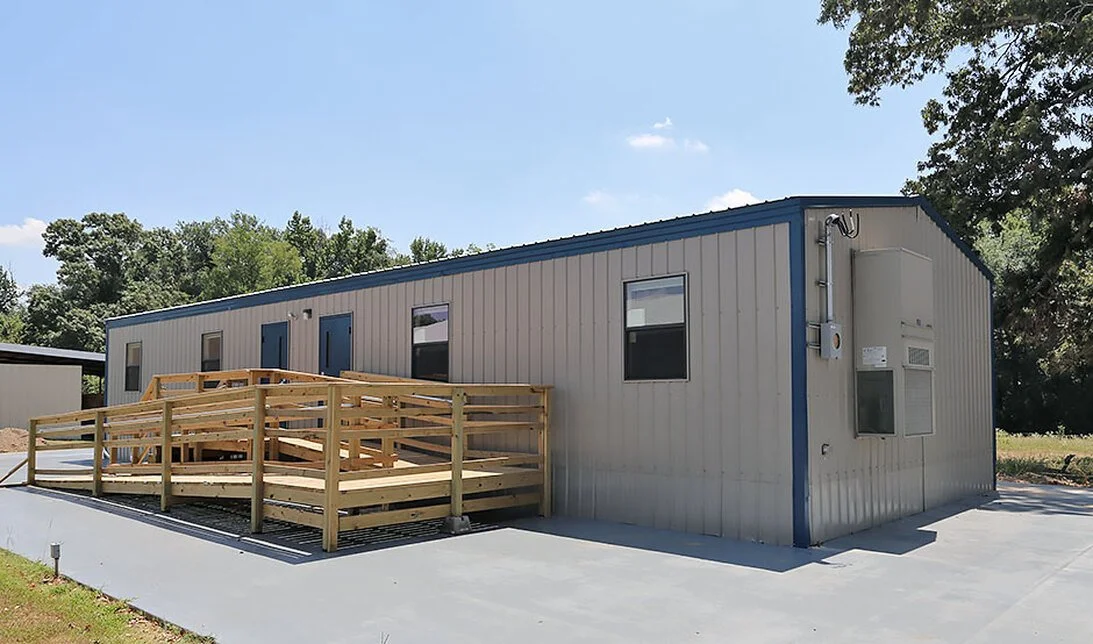
Completed modular building with integrated accessibility system, demonstrating how structural design aligns with real site use, foundation support, and code-compliant access requirements.
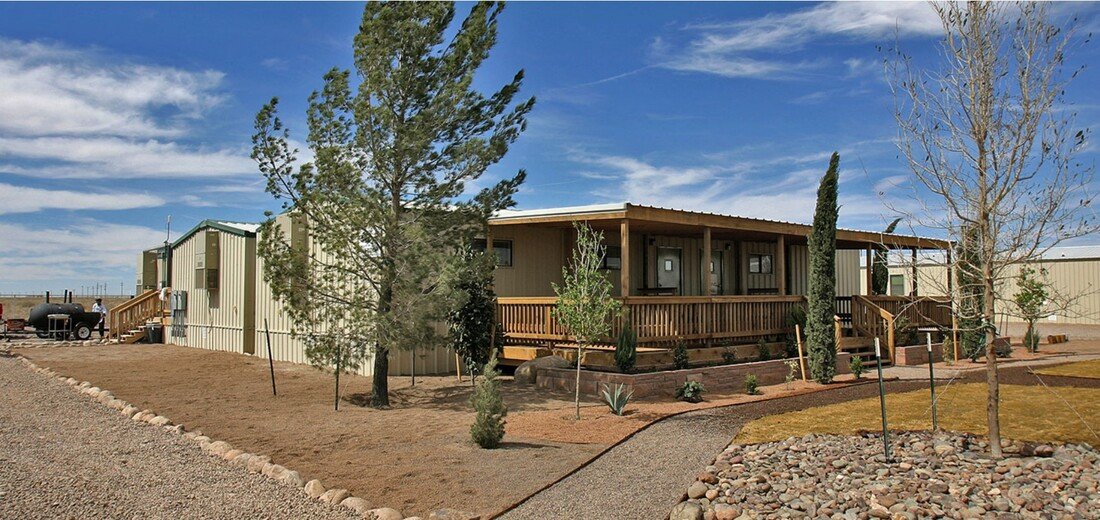
Multi-unit modular residential building.
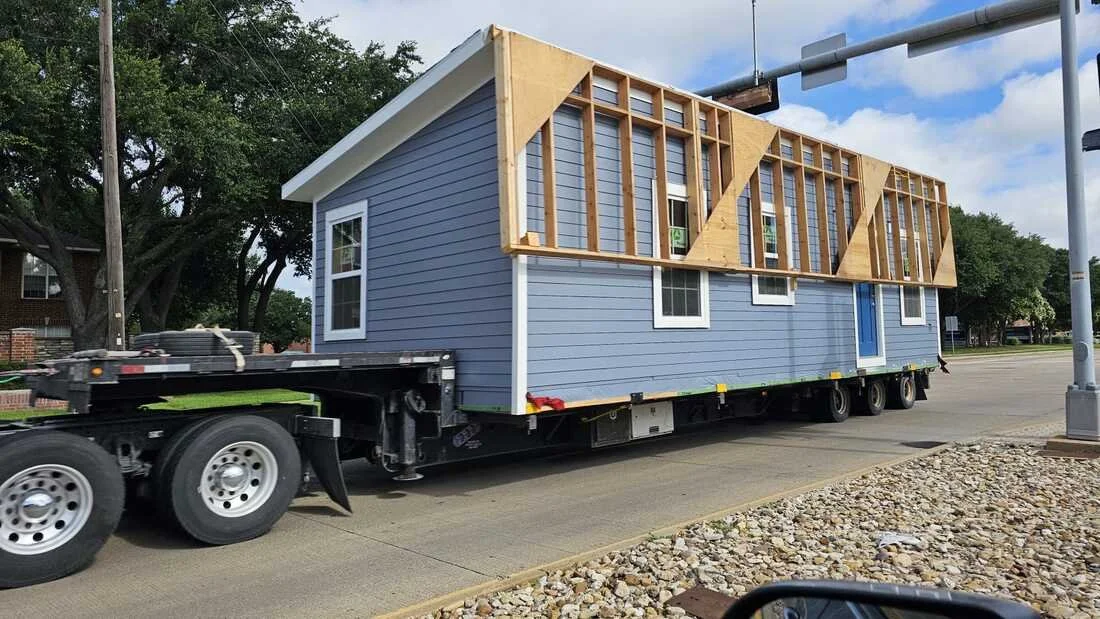
Transport phase of a modular unit highlighting the importance of structural integrity during lifting, hauling, and temporary support conditions.
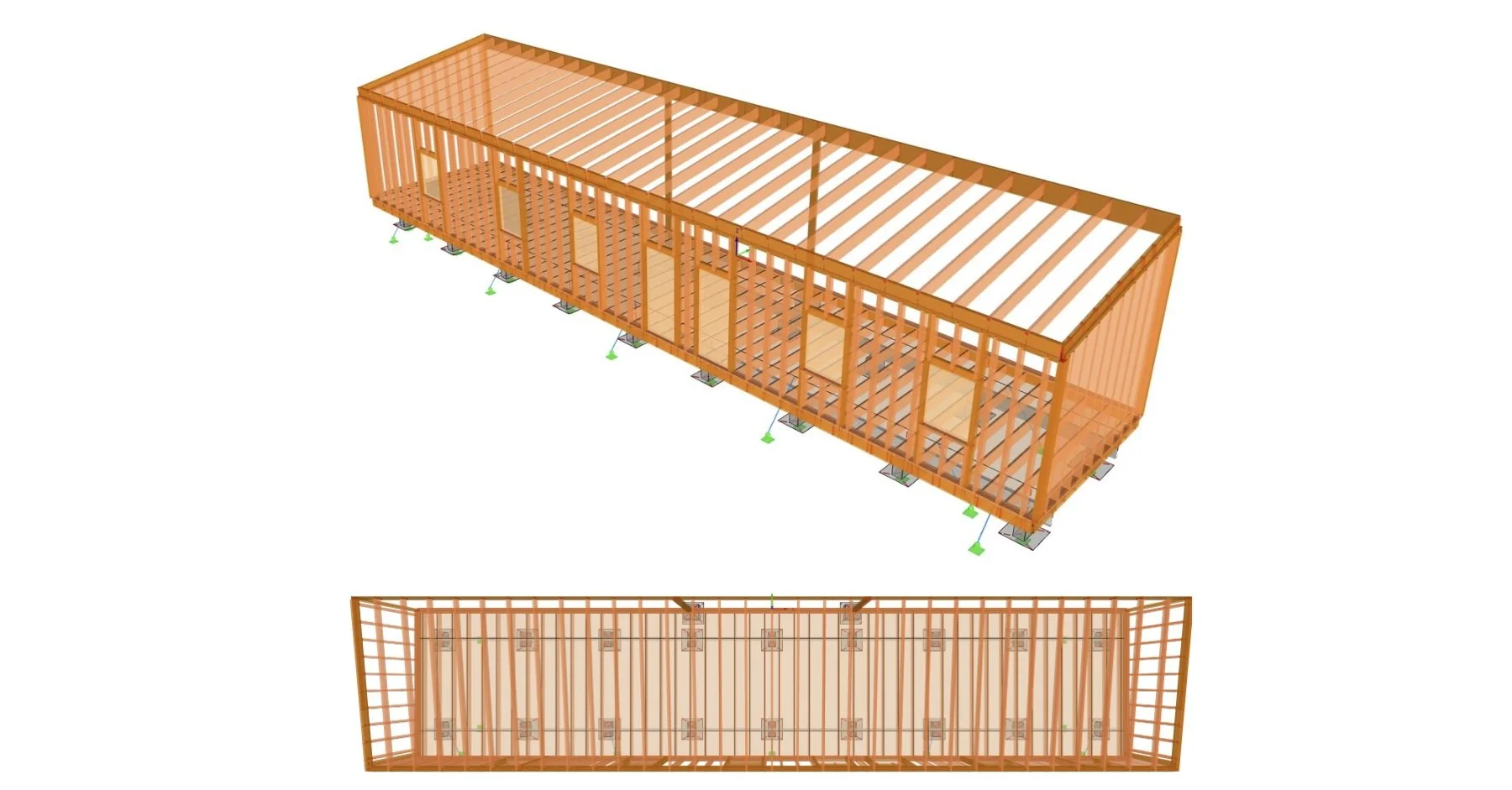
Detailed structural framing model illustrating load paths, stud layout, and support reactions used to verify stability, stiffness, and constructability of the modular unit.
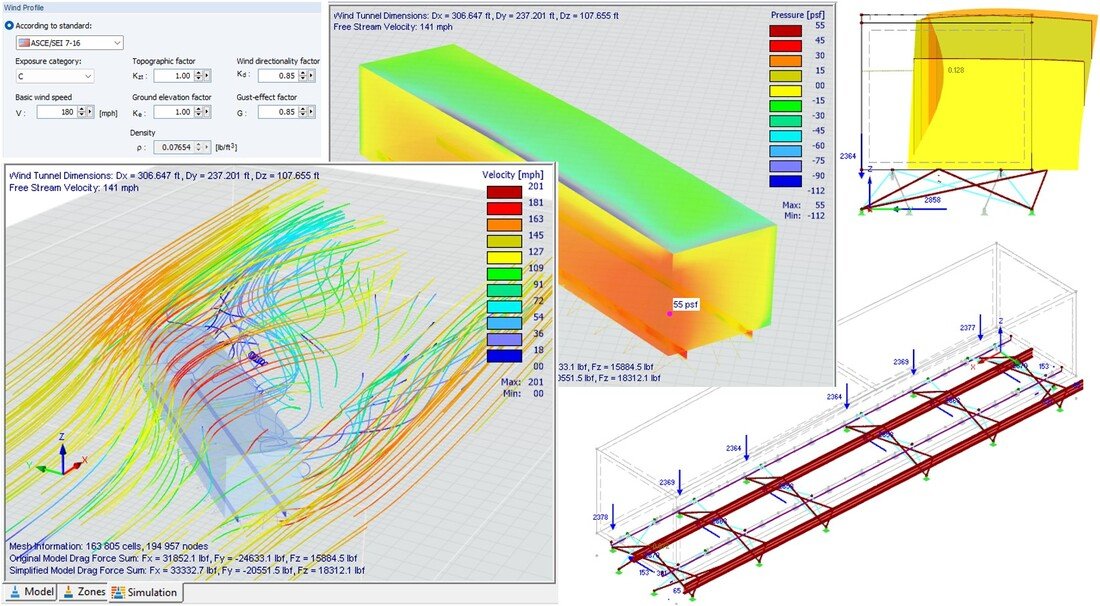
Combined wind and structural analysis evaluating pressure distribution, lateral response, and frame behavior under site-specific loading conditions.
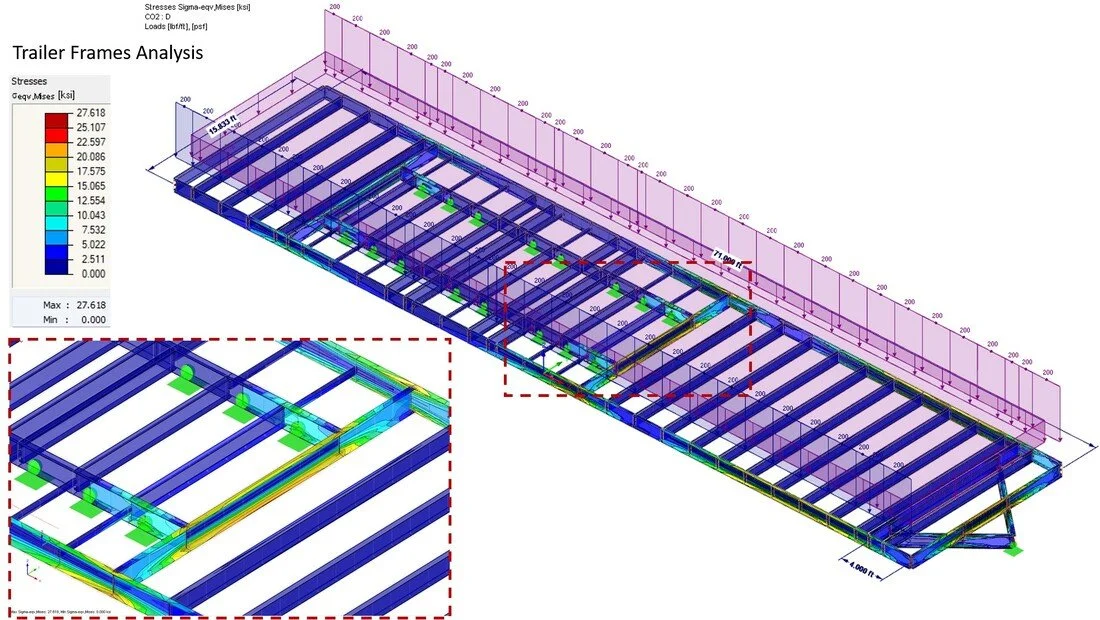
Finite element analysis of trailer framing to verify load distribution, stress concentrations, and structural capacity during transport of modular buildings.

Real-world transport conditions showing how modules are exposed to dynamic loads, requiring analysis of vibration, acceleration, and support points during delivery.