
Shade & Canopy Structures
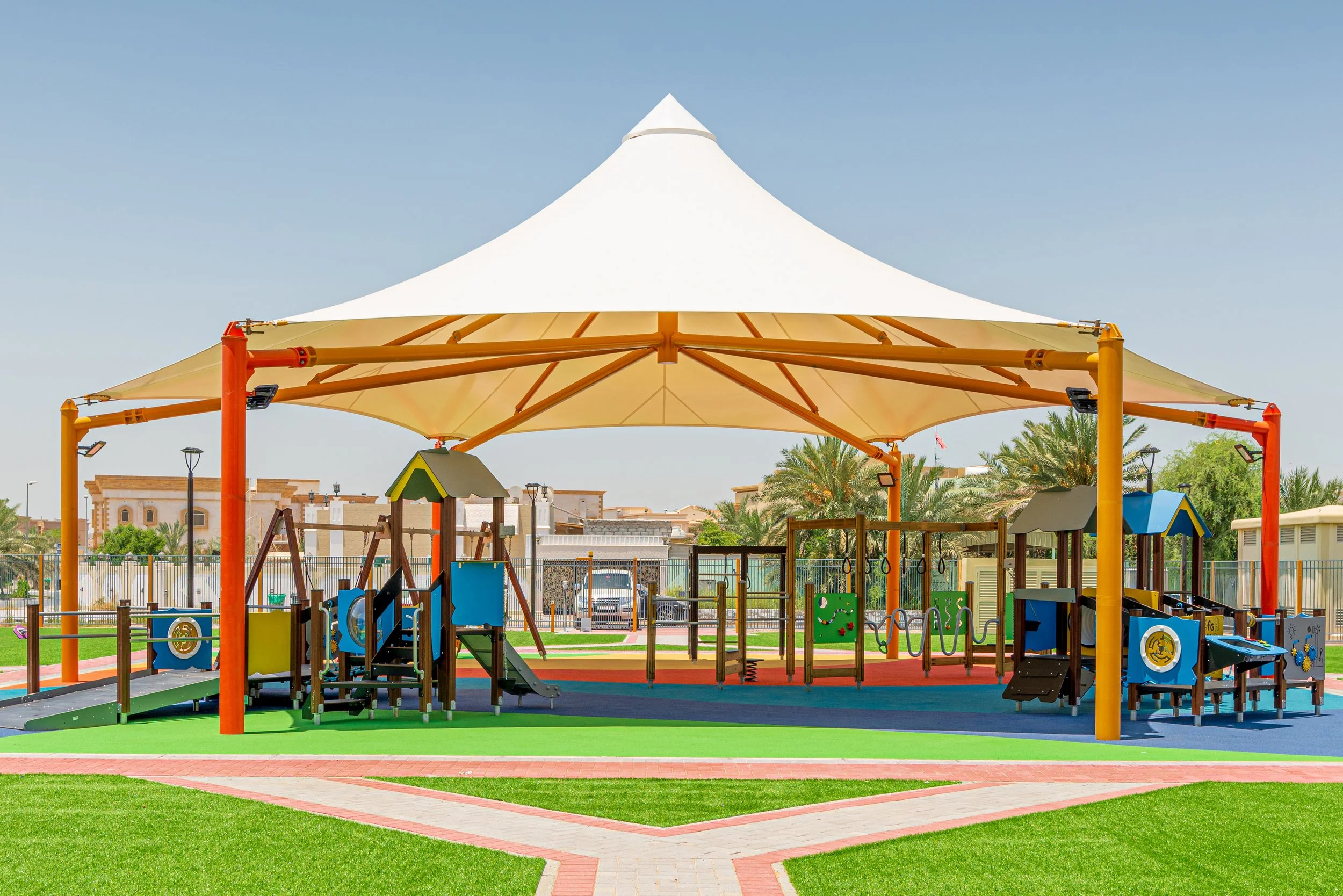
Shade and canopy structure projects often depend on quick turnaround, smooth coordination, and reliable structural support to move from concept to installation efficiently.
MSC helps clients reduce avoidable delays by providing practical engineering support tailored to the structure, loading conditions, and project location. We understand the value of time, especially when these projects are tied to fabrication schedules, customer commitments, and permit review. Our role is to help clients move forward with clearer engineering direction and fewer unnecessary coordination issues.
Interested?
Our Design Capabilities
We design various shade structure types and shapes including sails, multi-level framed sails, squares, rectangles, mega span, vehicle parking structures, hexagon, octagon, shade kites, single cantilever, wraparound single cantilevers, double cantilevers, T-cantilever, single posts, double posts and custom shape shade structures. We design aluminum and wood frame fabric structures from temporary structures for wedding and gathering events to luxury glamping camps. We utilize state-of-the-art structural design software including digital wind tunnel simulation software for generating wind loads for unusual shape structures. We design shade structure foundation systems, including drilled piers, drilled shaft footings and concrete spread footings.
Sneak Peek of Our Shade & Canopy Structural Analysis
A look into how tensile membrane behavior, wind interaction, and support reactions are analyzed to ensure stability, durability, and performance in real-world conditions.
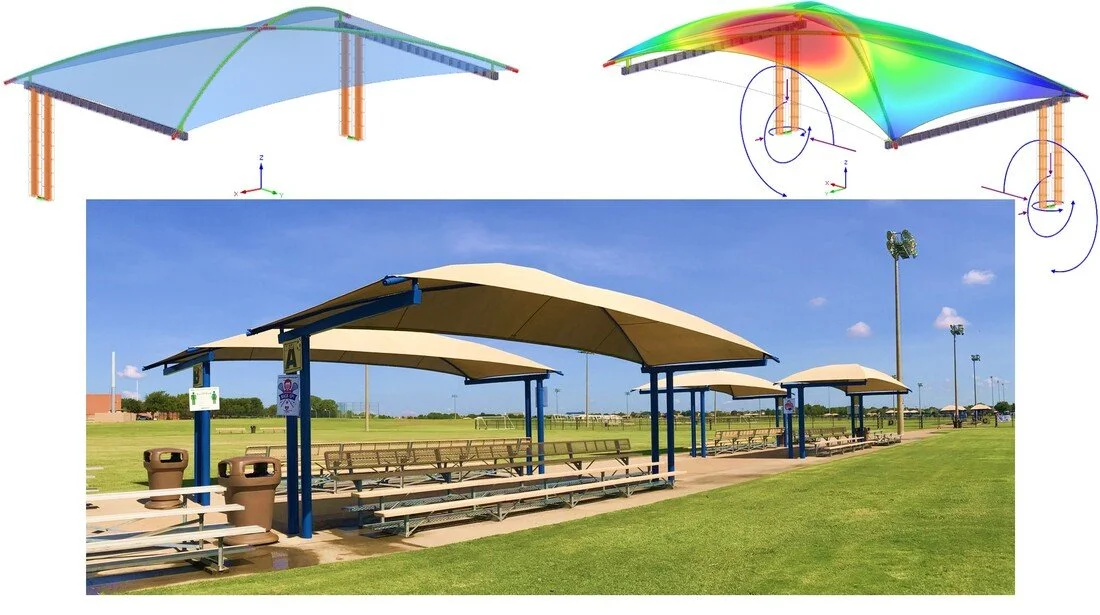
Parametric structural model illustrating membrane geometry and load distribution across curved canopy surfaces, capturing the interaction between tensioned fabric and supporting frame.
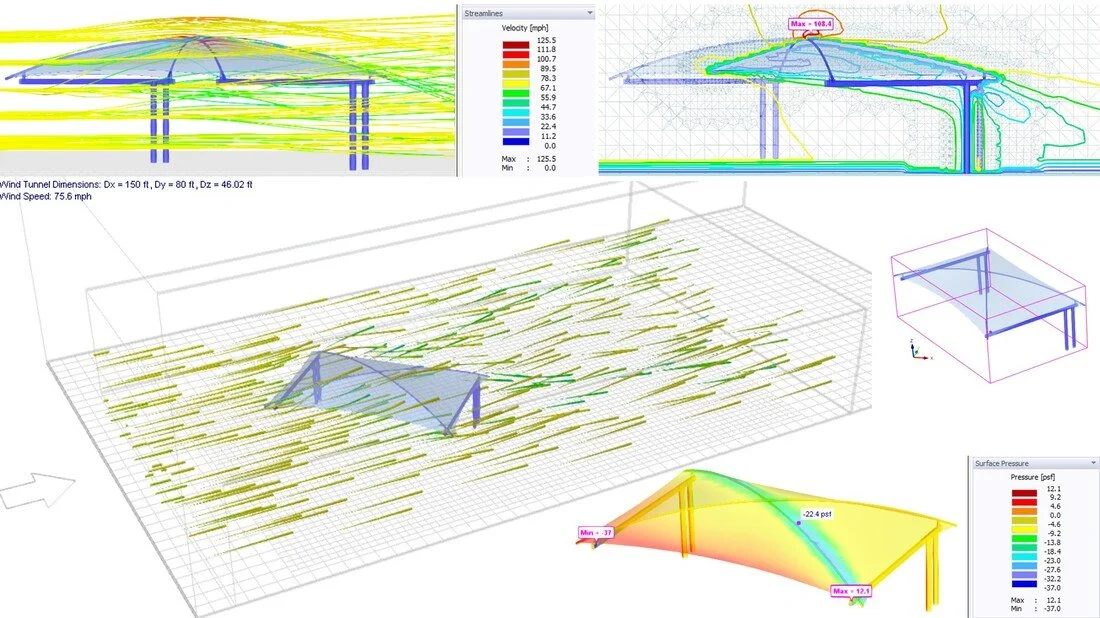
Wind tunnel simulation showing airflow patterns, velocity gradients, and pressure zones acting on canopy surfaces, critical for evaluating uplift and lateral load effects.
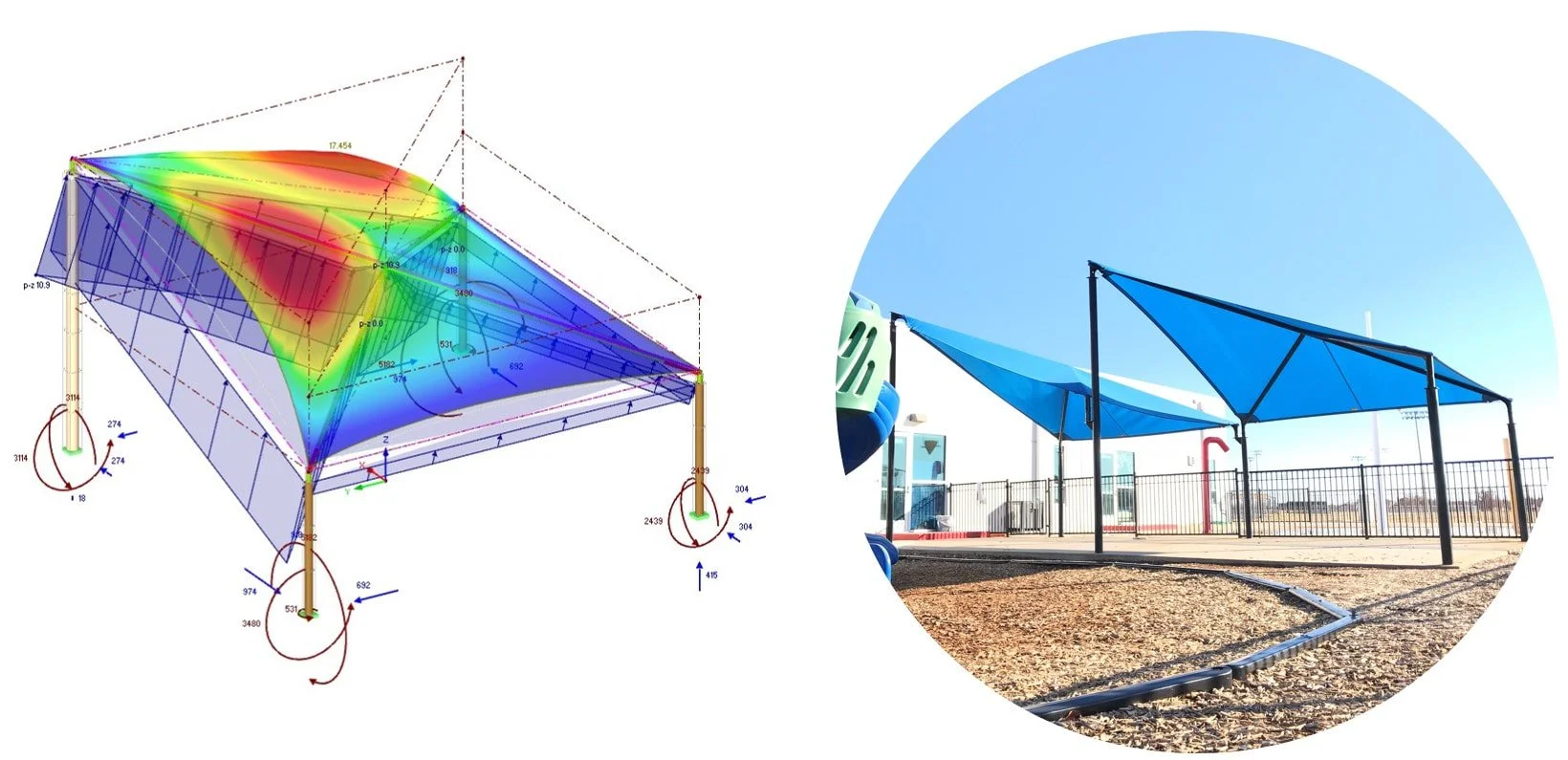
Finite element analysis of membrane stress distribution and support reactions, highlighting how tension forces are transferred to columns and foundations.
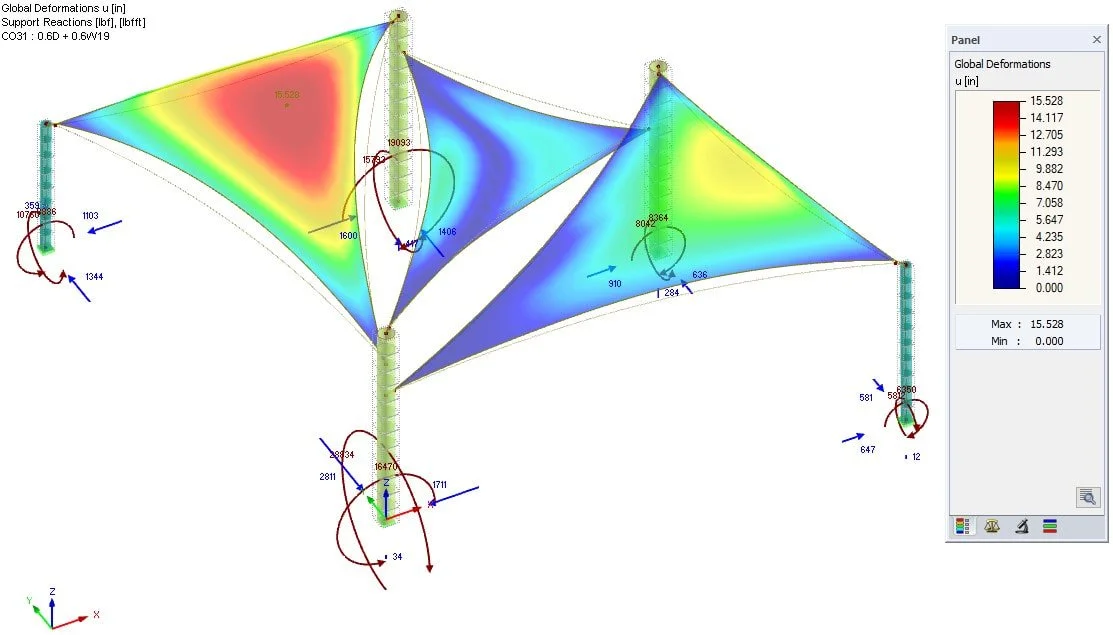
Global deformation analysis under combined loading, demonstrating membrane deflection behavior and structural response at support points.
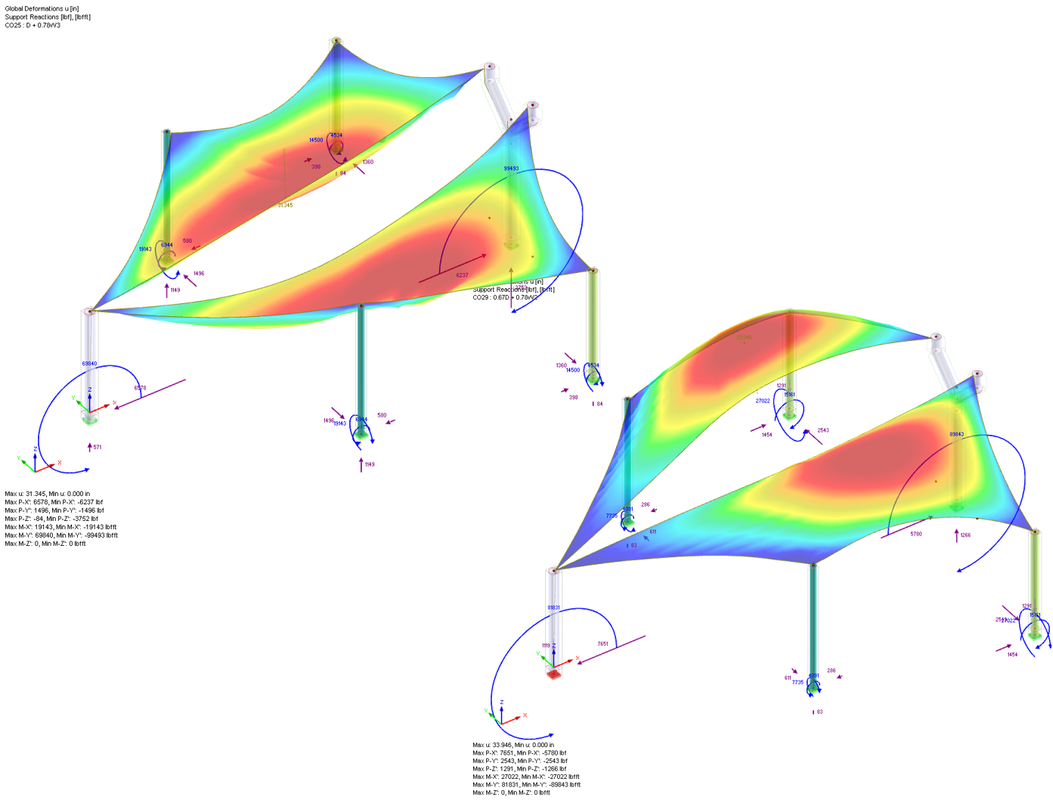
Comparative stress contour results for multiple canopy configurations, used to optimize geometry, tensioning strategy, and structural efficiency.
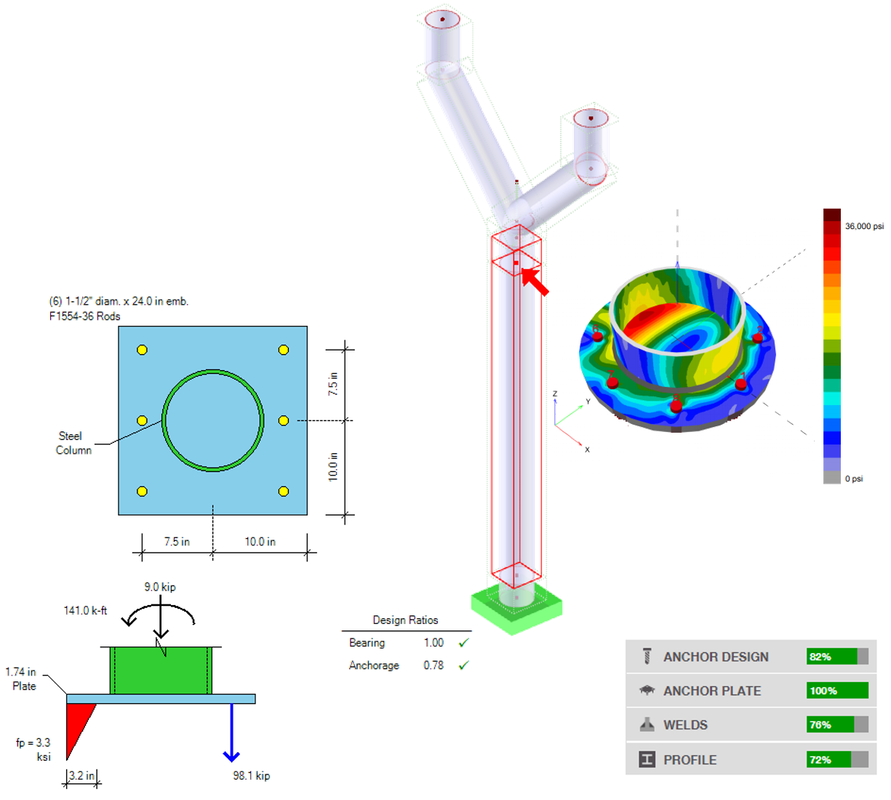
Detailed anchorage and base plate design analysis showing load transfer, bearing checks, and connection performance under applied structural forces.
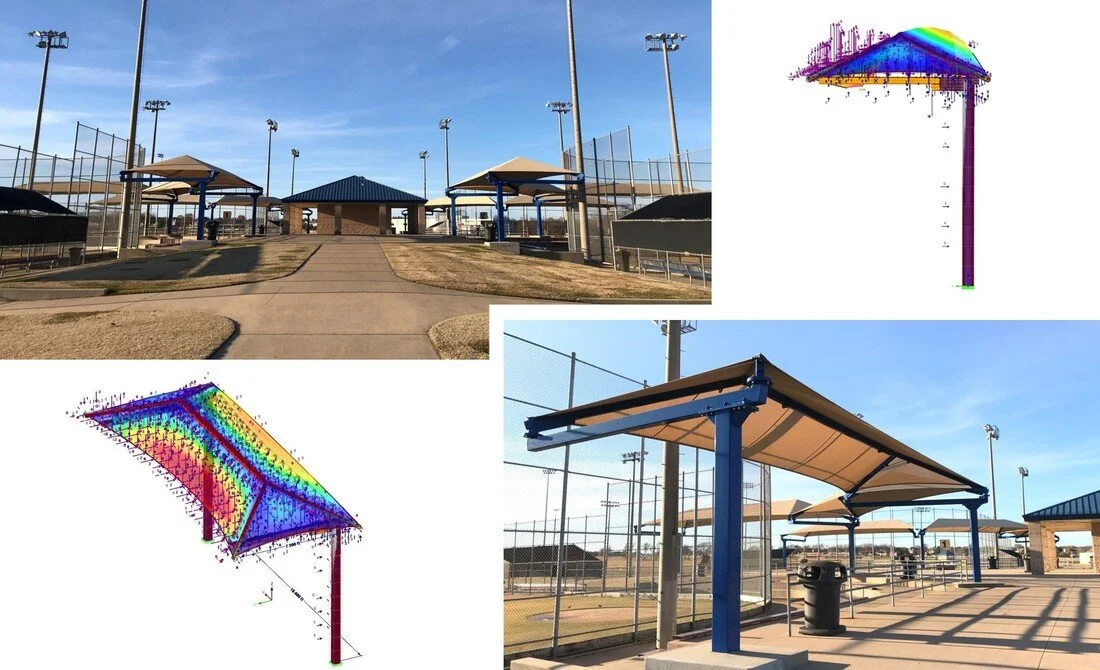
Field application of shade canopy systems, where structural analysis ensures reliable performance under wind exposure and long-term service conditions.