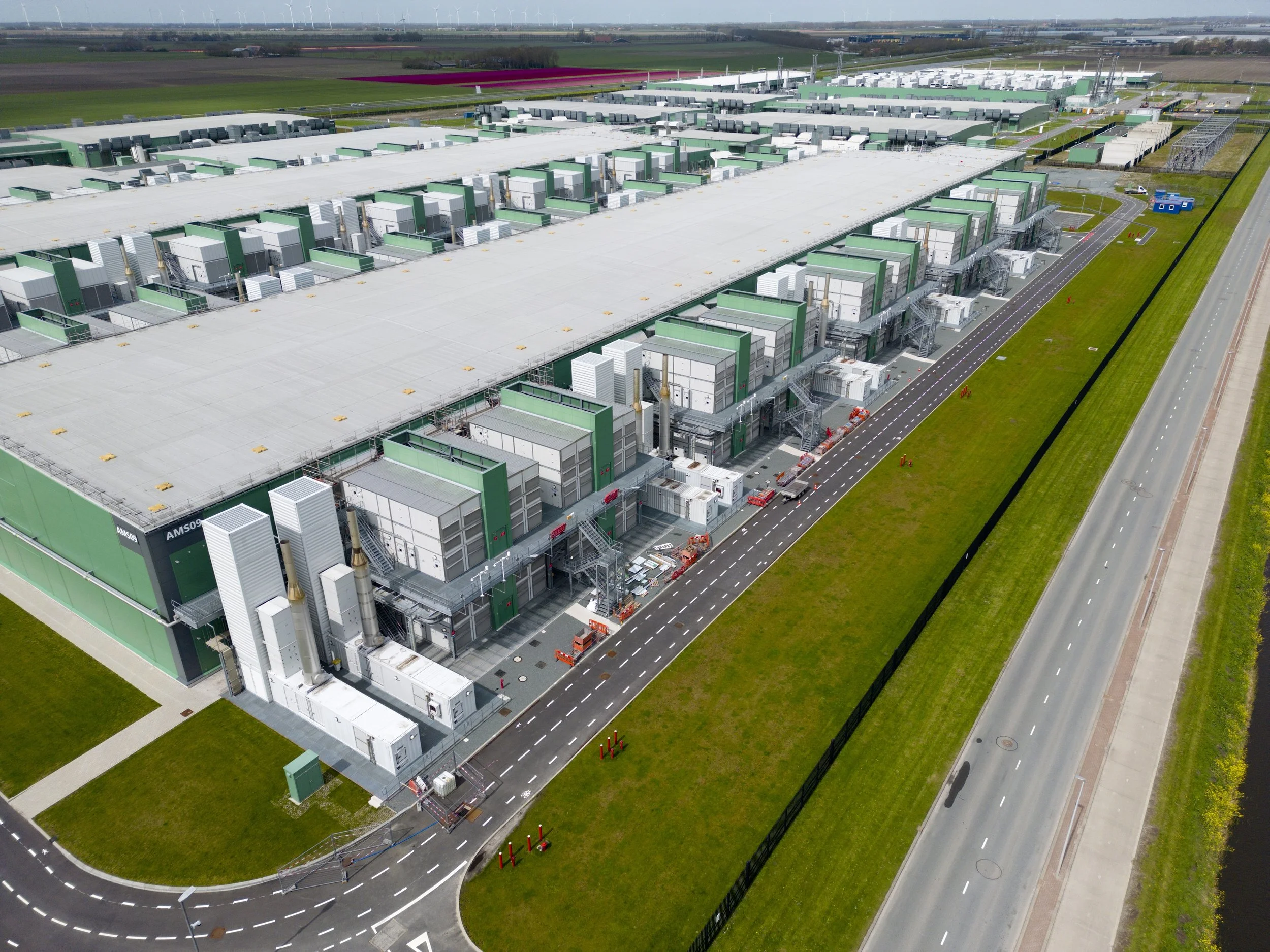
Data Centers
Data center projects demand speed and precision, especially when modular components or specialty structural conditions are involved.
MSC helps clients reduce delays and move faster by providing clear, project-specific engineering support that aligns with the structural demands of the project and the pace of delivery expected in this sector. We understand the value of time in data center work, where schedules are tight and unnecessary coordination can become costly. Our focus is on practical engineering that helps support progress without adding avoidable complexity.
Interested?
A closer look at structural analysis behind modular data center buildings, including wind response, lifting performance, and system behavior under critical loading conditions
Sneak Peek of Our Structural Analysis in Data Center Projects
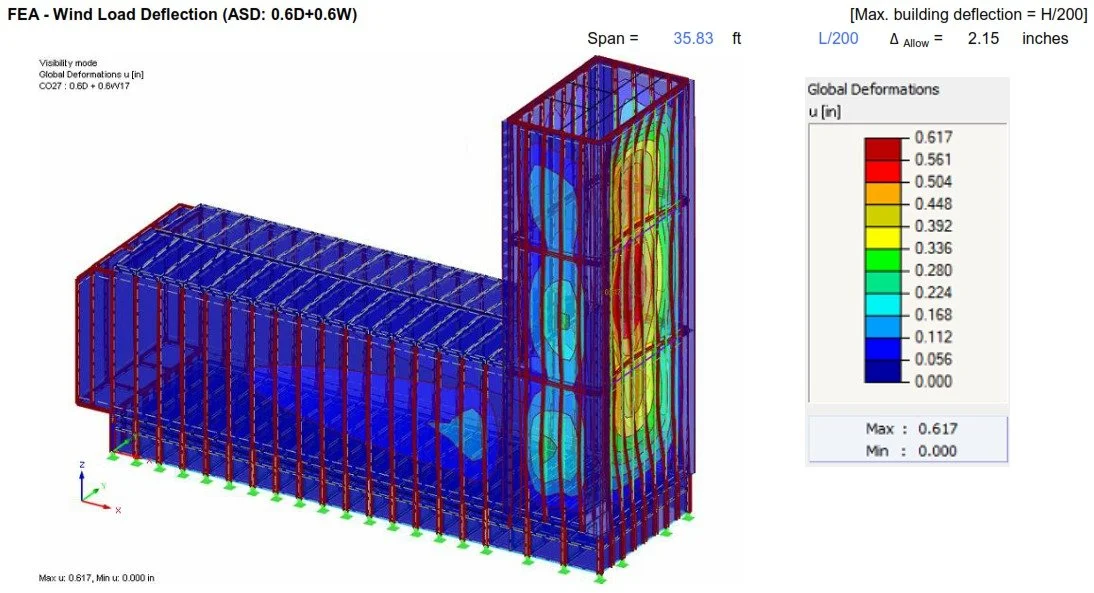
Wind load deflection analysis of modular data center structure, verifying serviceability limits and structural performance under lateral loading conditions.
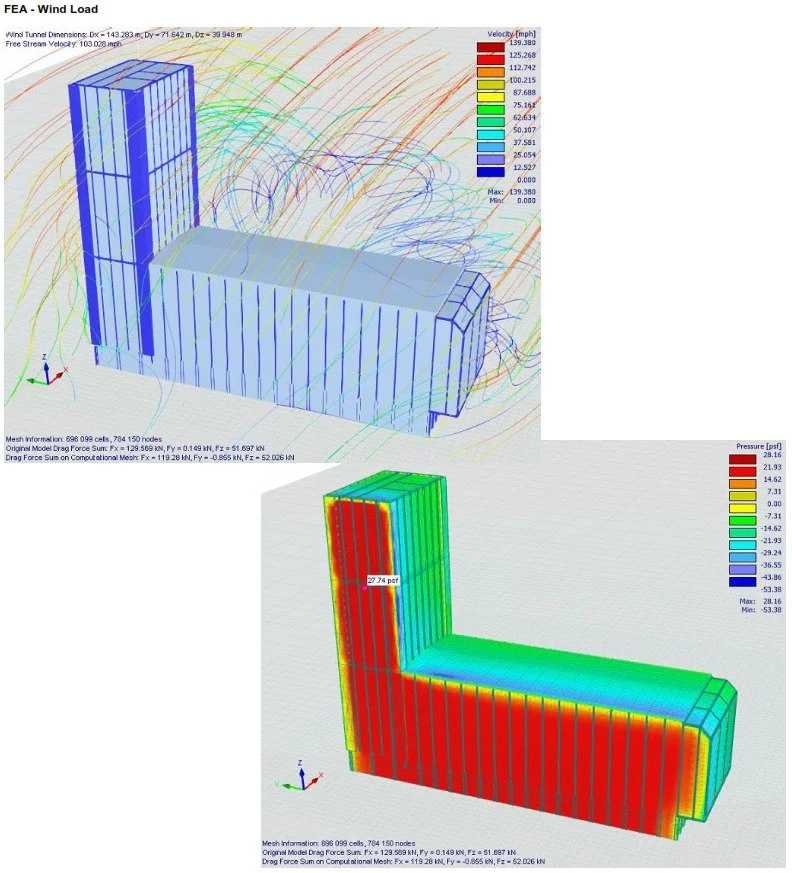
Digital wind tunnel simulation showing airflow patterns and pressure distribution on modular data center configuration, used to refine lateral load assumptions and structural response.
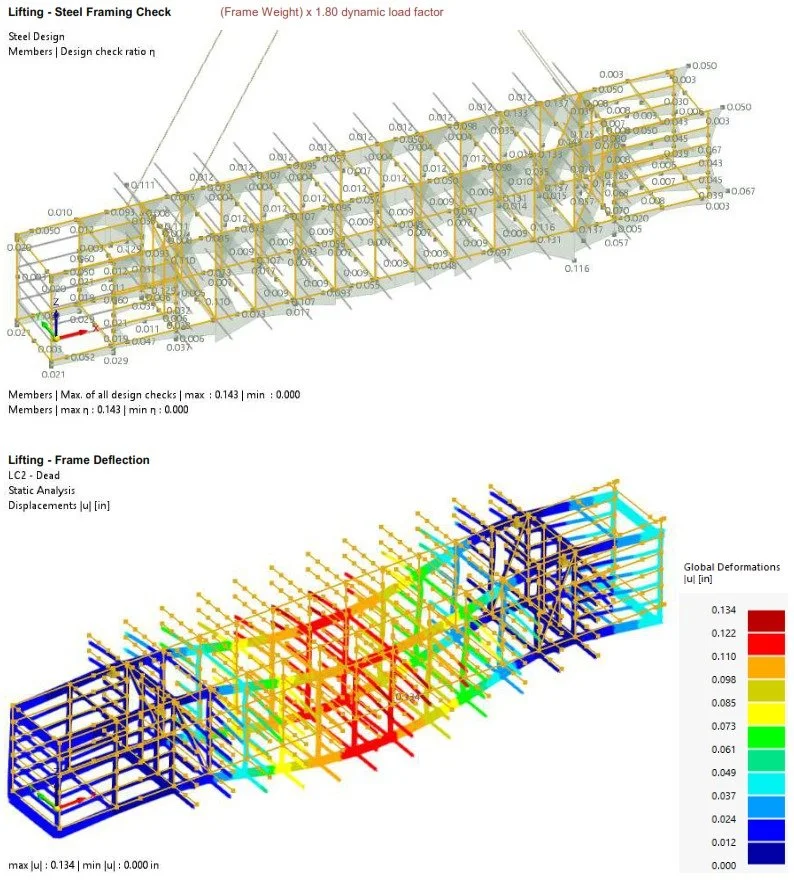
Lifting analysis of modular steel framing, evaluating member utilization ratios and global deflection under lifting load cases to ensure safe handling and transportation.
Practical structural support for data center buildings, equipment enclosures, and critical infrastructure structures
Data center projects are driven by performance, schedule, and reliability. Whether the structure is a modular equipment building, container-based enclosure, power support structure, or site-built utility component, the structural side has to work clearly and predictably under real project demands.
These projects often move fast, but the structural requirements are rarely simple. Heavy equipment, concentrated loads, support framing, wind exposure, anchorage demands, and project-specific layouts all need to be understood early so the design can move forward with fewer unknowns.
Why data center structures need special attention
Data center-related structures often carry more than typical building loads. They may support electrical equipment, cooling systems, battery systems, generators, cable infrastructure, rooftop units, or custom utility assemblies.
That creates structural questions such as:
how concentrated equipment loads affect framing
how support reactions transfer into foundations
how openings and access requirements affect stiffness
how rooftop or platform-mounted equipment changes load paths
how lateral forces affect tall, exposed, or lightly enclosed structures
how anchorage and support details perform under real loading conditions
In these projects, structural design is not only about the building shell. It is also about how the structure supports mission-critical equipment and infrastructure.
A practical fit for critical infrastructure projects
Data center work often moves with urgency, but the structural side still needs to be disciplined. Good engineering support helps bring clarity to load paths, support demands, deflection behavior, framing response, and overall structural reliability.
That means focusing on:
actual equipment and support conditions
realistic load transfer
practical framing solutions
clear support and anchorage demands
responsive communication
structural review that helps the project keep moving
For data center structures, good engineering support helps reduce uncertainty where reliability matters most.
Why this structure type benefits from practical engineering review
Data center projects usually depend on more than a generic structural solution. They benefit from practical review that helps clarify:
where the governing loads actually occur
how equipment loads affect framing demand
which members, supports, or connections control the design
how the structure behaves under service and lateral conditions
what reactions and anchorage demands must be carried into the foundation system
whether the current layout creates avoidable structural inefficiencies
The goal is to make the structure easier to understand, easier to coordinate, and more dependable under real operating demands.
Planning a data center structure or equipment support project?
Share your layout, equipment information, support conditions, and project criteria so the structural scope can be reviewed clearly and efficiently.