Structural Engineering for Shade Canopy Structures at Parks and Sports Facilities
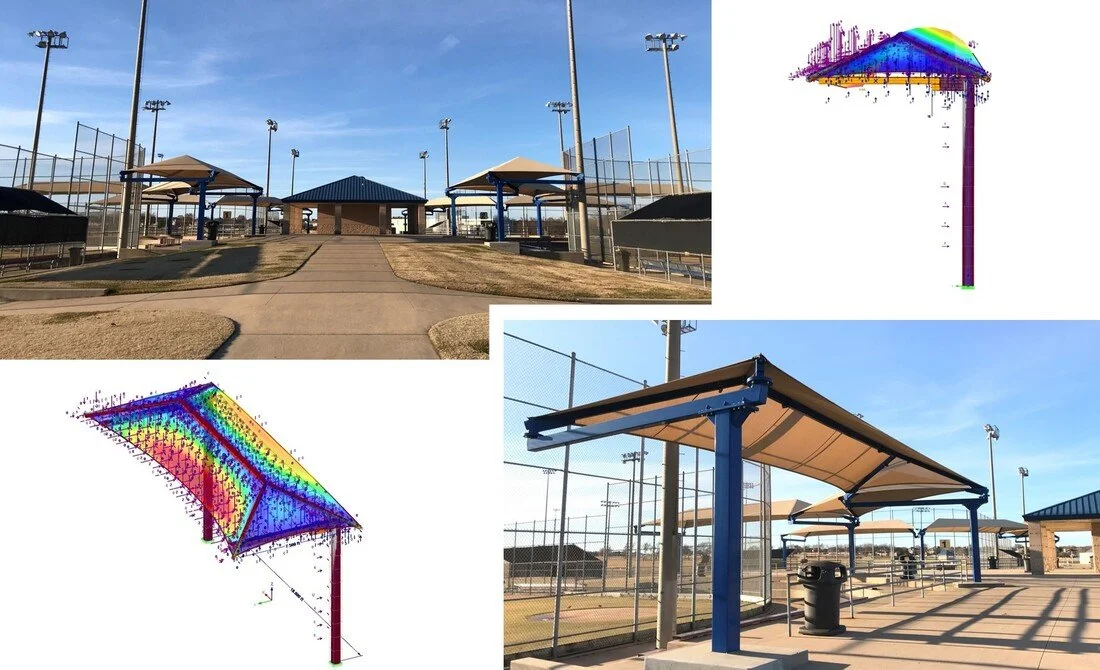
Image 1.0: Curved shade canopy structure with engineering model visualizations showing structural response and load distribution under design conditions.
Shade canopy structures are widely used at parks, sports complexes, playgrounds, and public gathering areas to provide weather protection and improve user comfort. While these structures often appear straightforward, their engineering can be more complex than expected.
Unlike enclosed buildings, shade canopies are typically open on all sides. This means wind can move both over and under the roof surface, creating uplift, suction, and unbalanced pressure conditions that may control the design. Because of this, wind analysis is often one of the most important parts of the structural engineering scope.
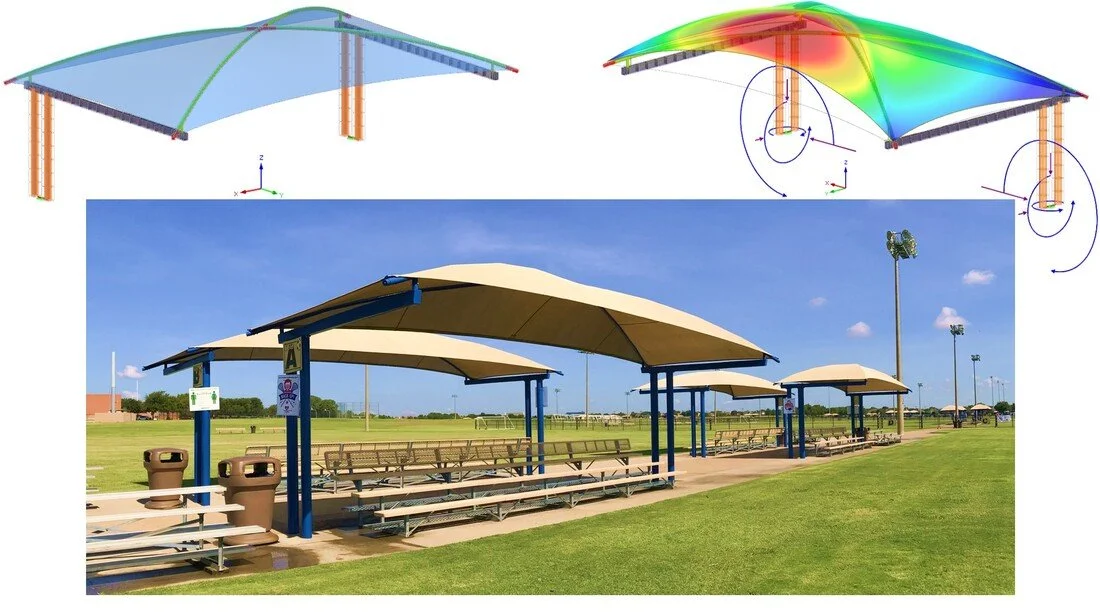
Image 2.0: Steel shade canopy structures at a sports facility with corresponding structural analysis models used to evaluate frame behavior and support conditions.
For steel-framed shade canopies, the engineering review usually includes the roof framing system, supporting columns, connection points, and base anchorage. The geometry of the canopy, including sloped or curved roof forms, can influence how loads travel through the structure. Even relatively light roof systems can generate significant reactions at columns and foundations under design wind conditions.
Typical engineering services for this type of structure may include:
Structural calculations for gravity and lateral loads
Wind load and uplift analysis
Steel frame member design
Connection and support review
Column base and anchorage evaluation
Foundation reaction information for footing design
Permit support documentation
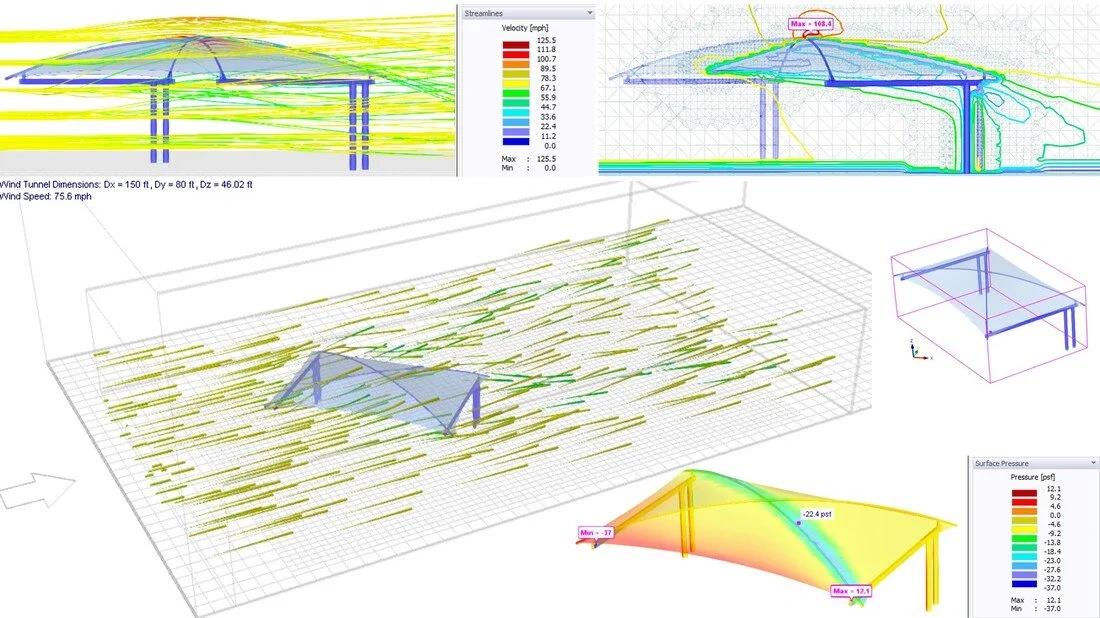
Image 3.0: Wind simulation of a shade canopy structure showing airflow and surface pressure effects.
For projects with custom roof shapes or membrane-style coverings, additional structural coordination may be needed to verify stiffness, deflection behavior, and load transfer between canopy components and primary steel supports.
In many public-use installations, shade canopies must balance appearance, durability, and code compliance. A well-engineered canopy structure is not only visually clean and functional, but also properly designed for wind exposure, repeated use, and long-term structural performance.