Understanding Foundation Reactions and Anchorage Design in Steel Base Connections
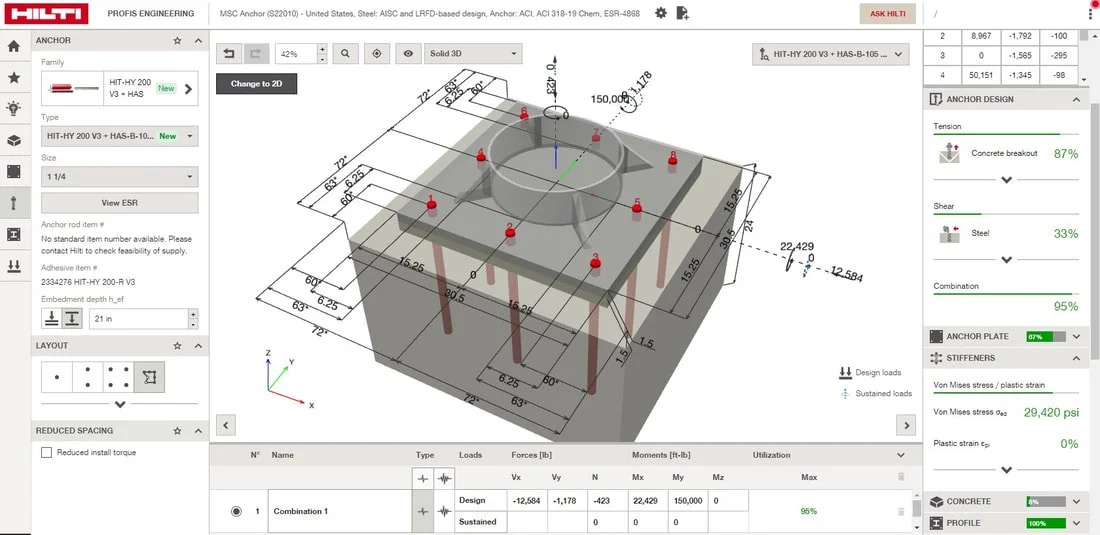
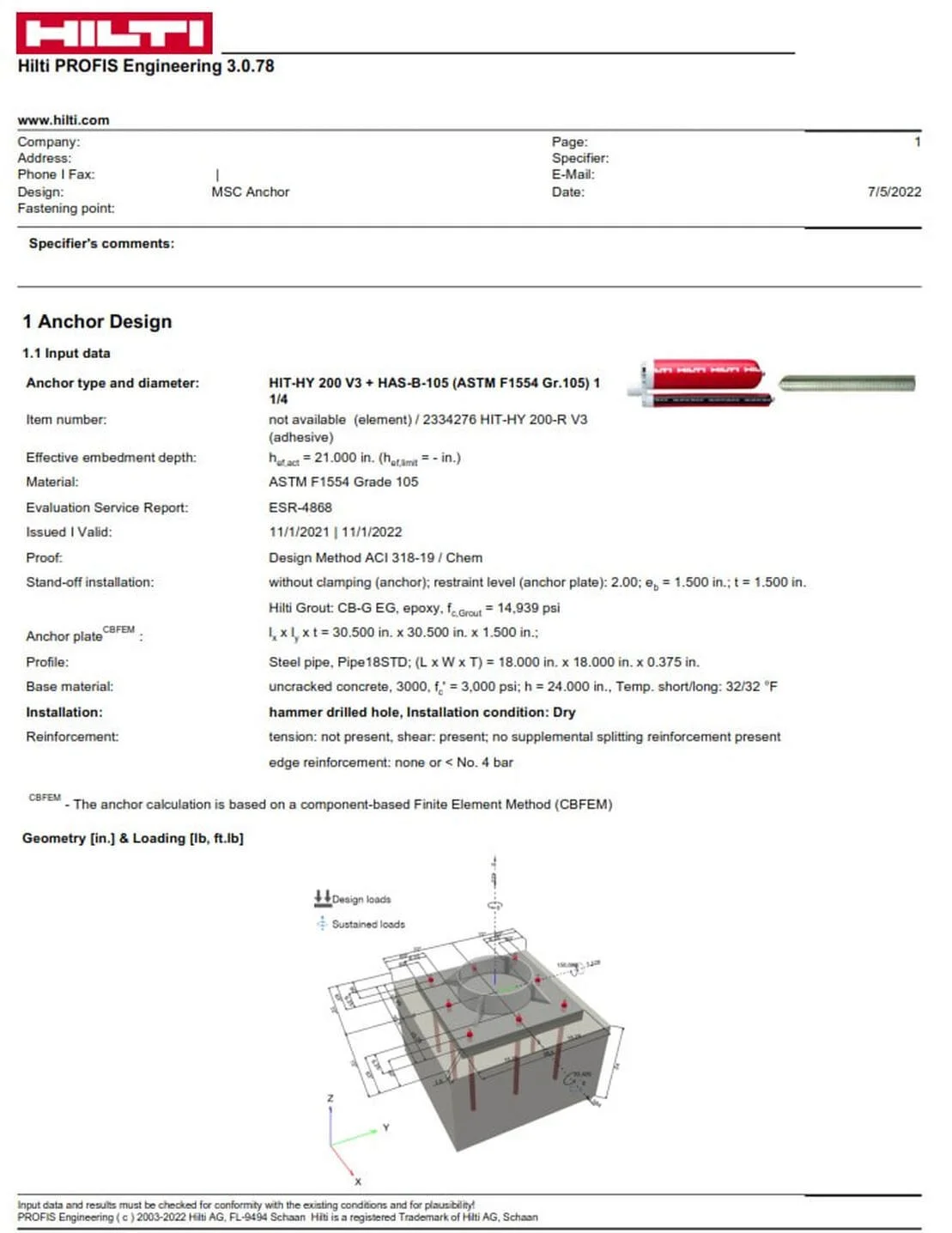
Foundation reactions and anchorage design play a major role in the performance of steel support systems. Whether the structure is a canopy, modular frame, equipment support, or custom steel assembly, the load path does not end at the column. The forces must be transferred safely through the base plate, anchors, grout, and concrete foundation.
A typical anchorage review starts with the support reactions from the structural model. These reactions often include vertical load, uplift, shear, and overturning moment. Once those forces are known, the connection at the base can be evaluated in more detail.
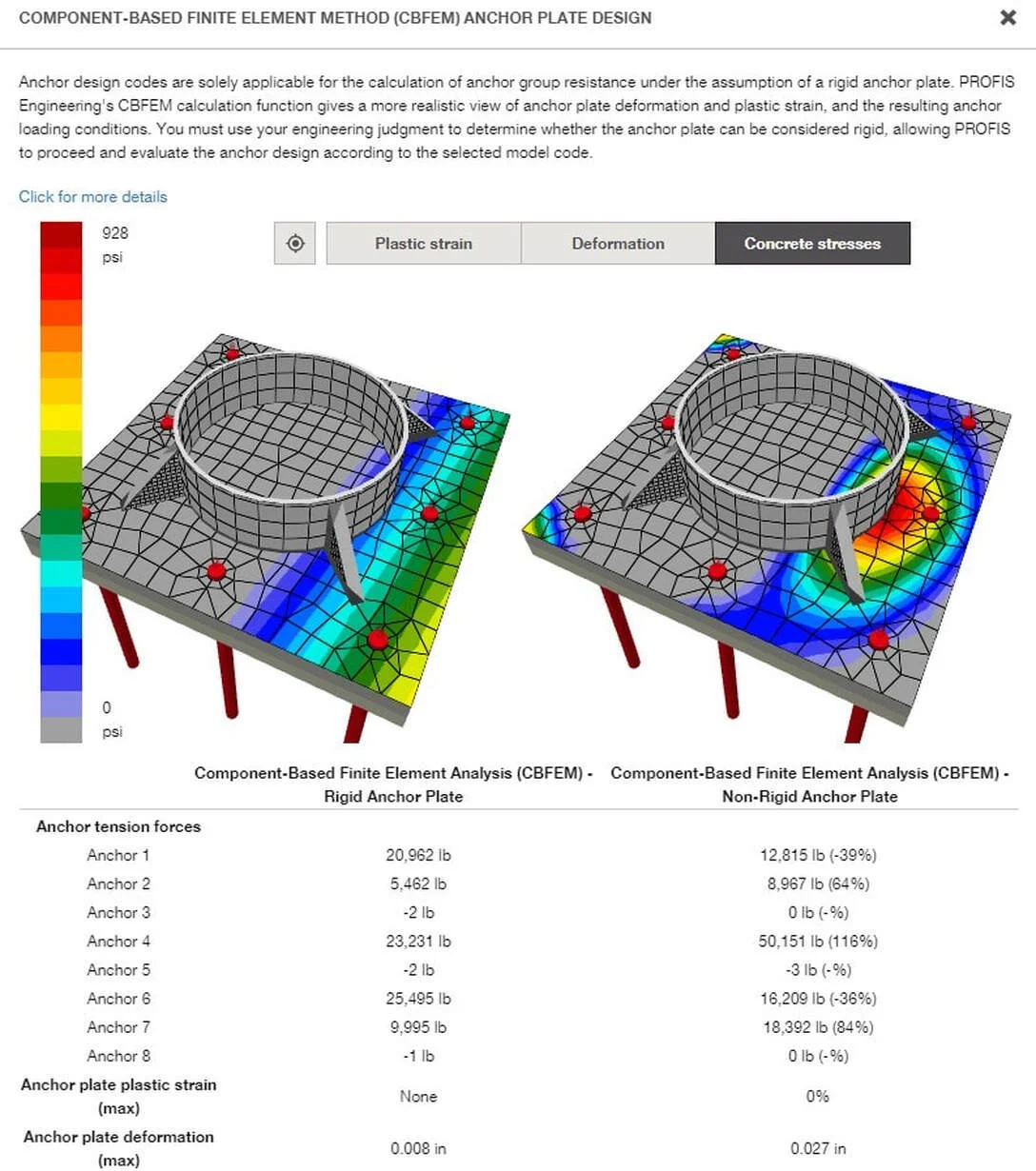
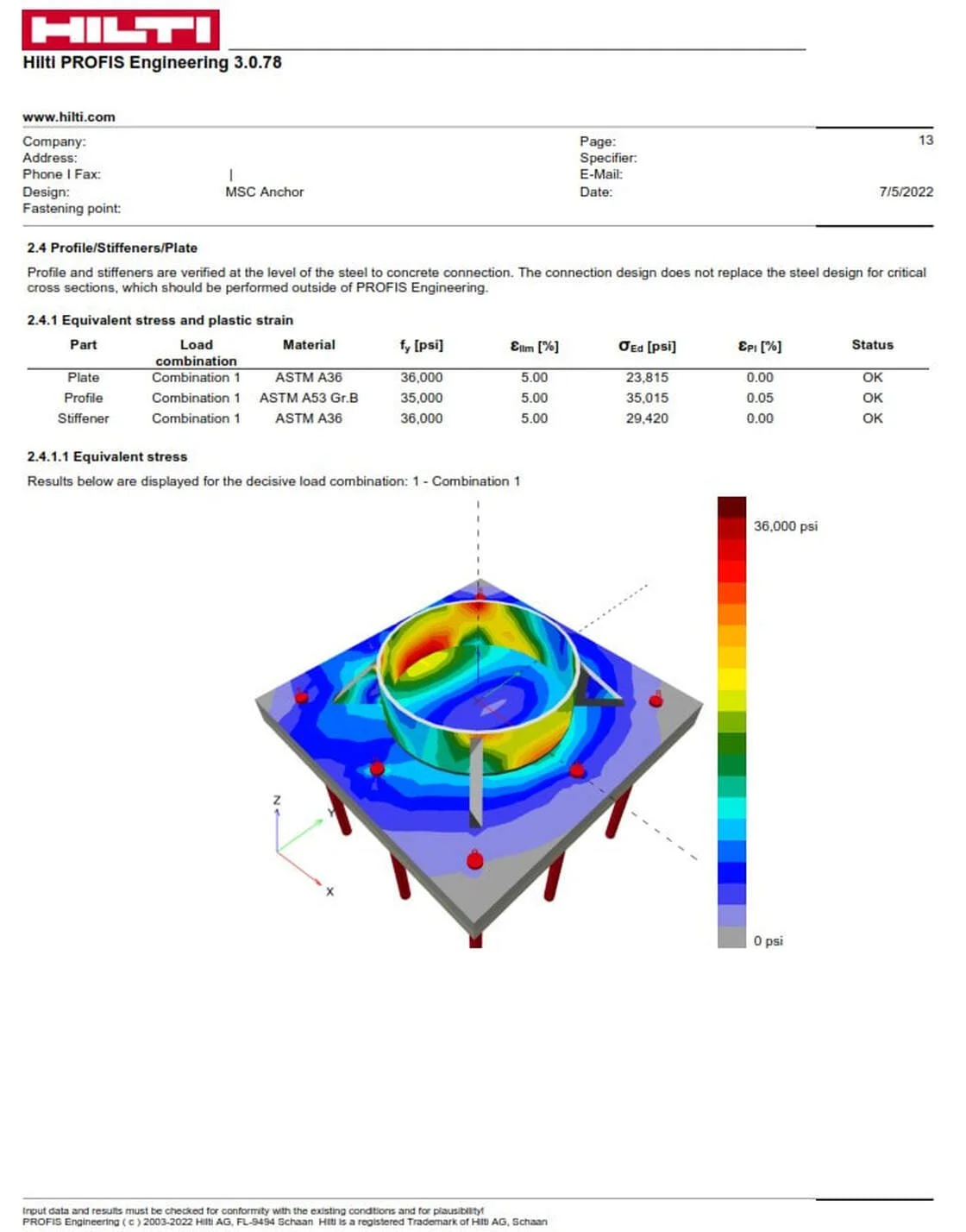
This is where base plate stiffness becomes important. A rigid plate assumption may distribute anchor forces differently than a more flexible plate. In some cases, component-based finite element analysis can provide a more realistic view of anchor demand, local plate deformation, and stress distribution within the connection.
Engineering review for this type of detail may include:
Anchor tension and shear checks
Base plate bending and stiffness review
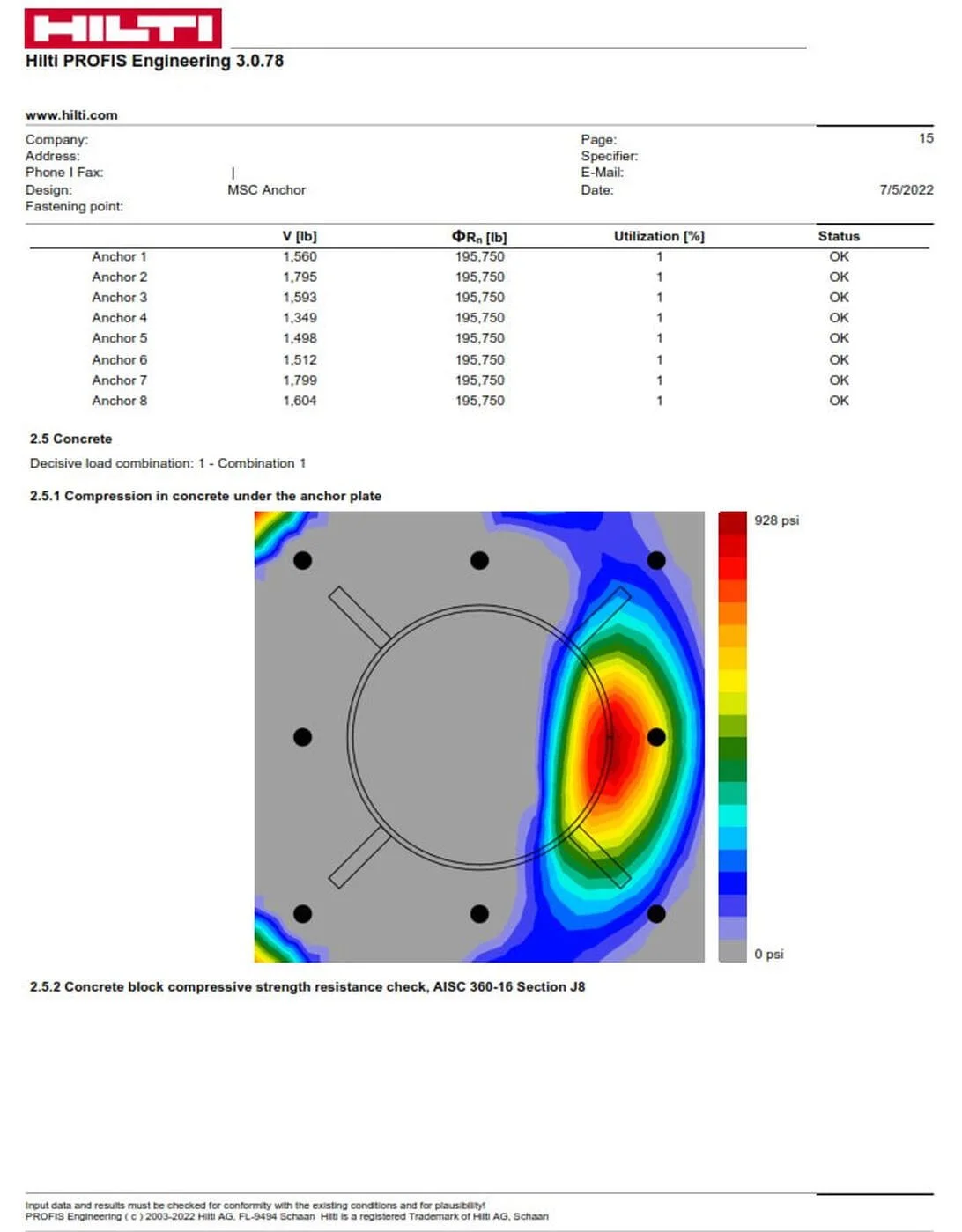
Concrete bearing and compression checks
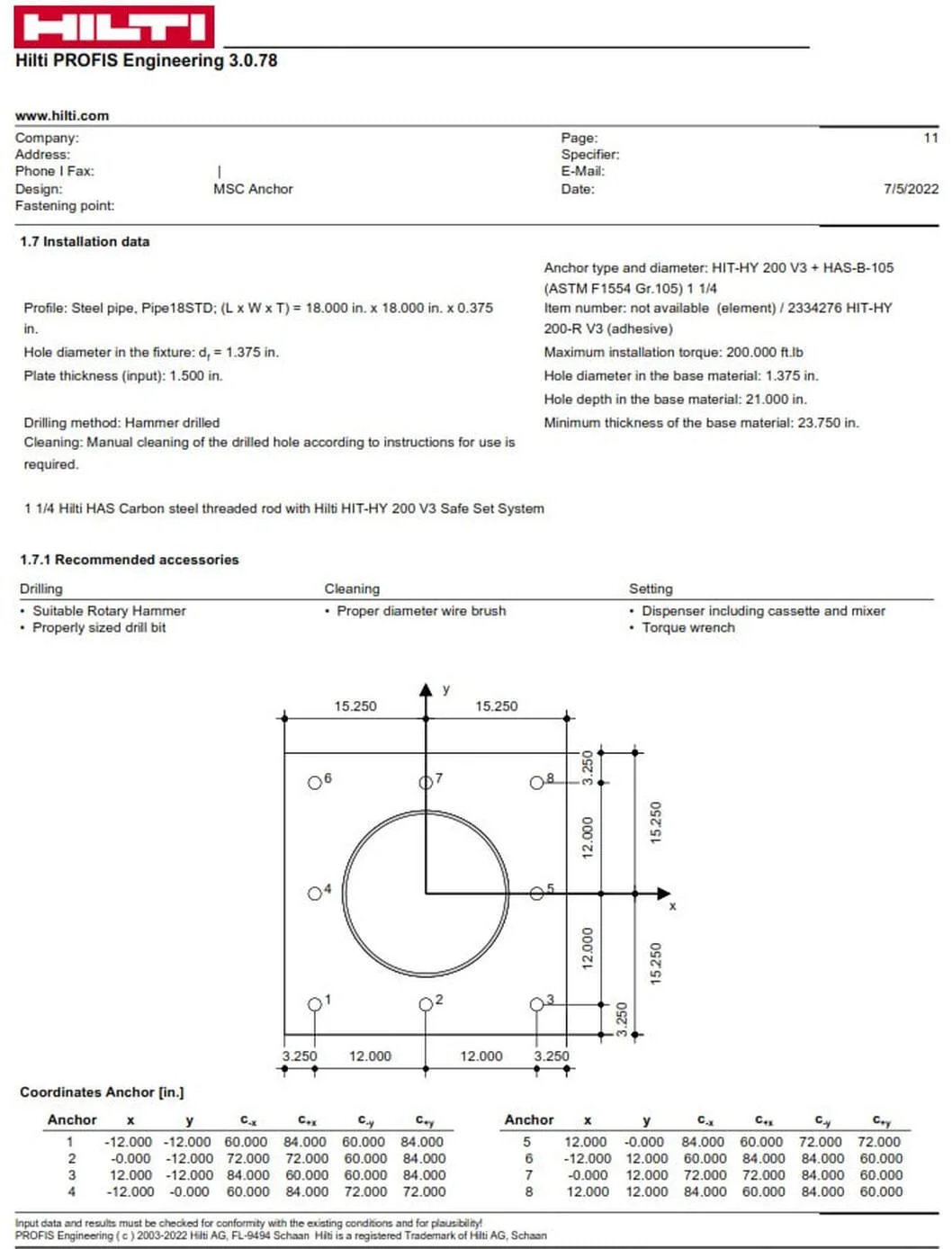
Anchor spacing, embedment, and edge distance verification
Stiffener and weld evaluation
Load transfer into the concrete pedestal or footing
The goal is to confirm that the connection works as a complete system, not just as separate parts. A strong anchor alone is not enough if the plate yields excessively, the welds are overstressed, or the concrete bearing zone becomes critical.
For many projects, clear anchorage calculations and base connection documentation are also important for permit review, fabrication coordination, and foundation design. A well-resolved base connection helps turn structural reactions into practical, buildable details.