ISO Container Structures on Complex Applications
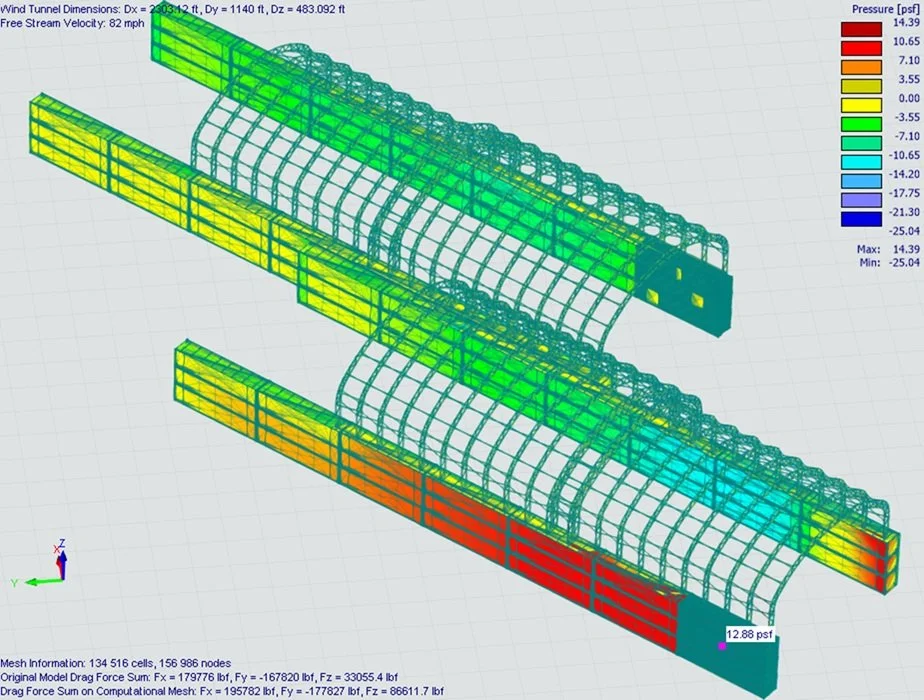
At first glance, ISO containers are simple, repeatable units. But when applied to complex structures, their behavior becomes far more interesting.
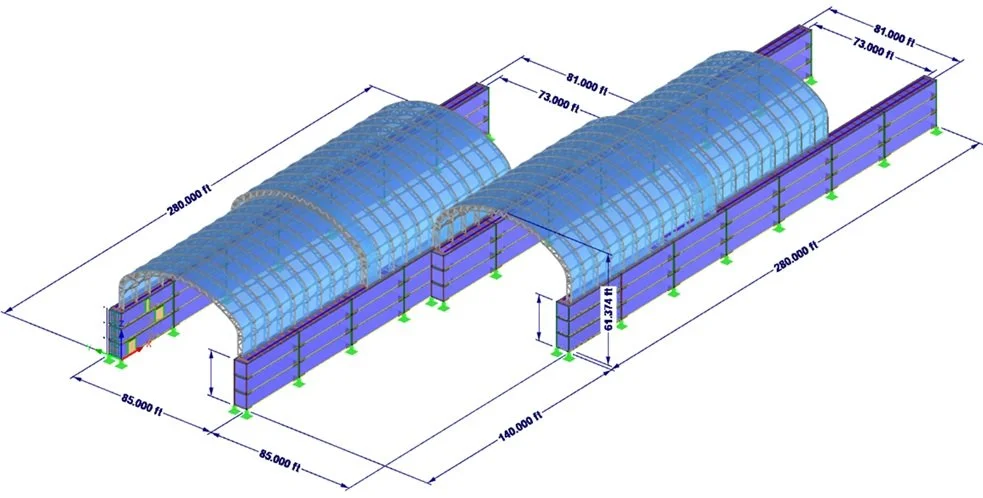
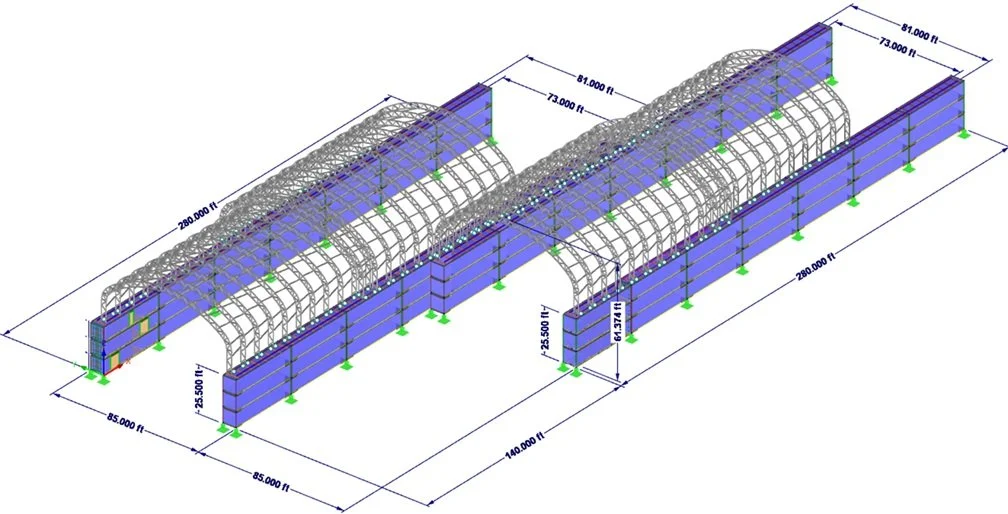
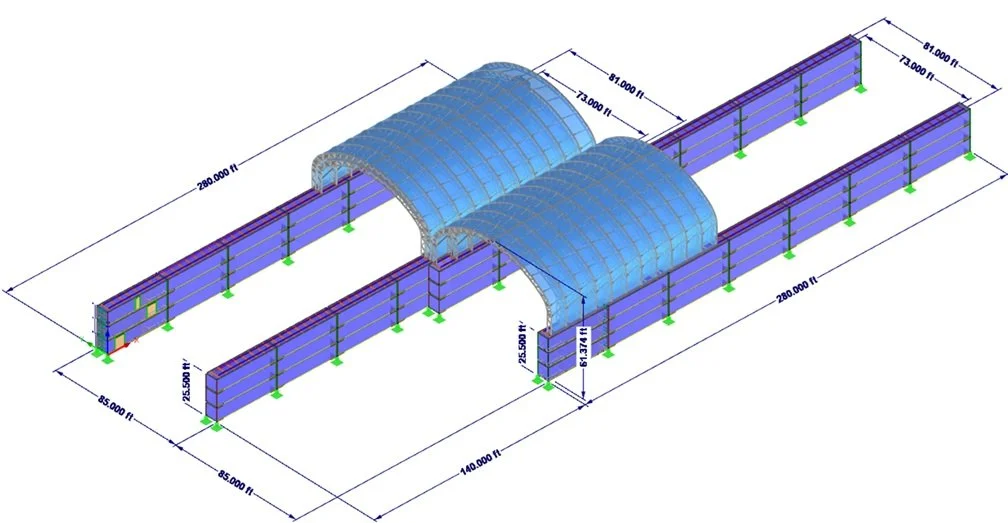
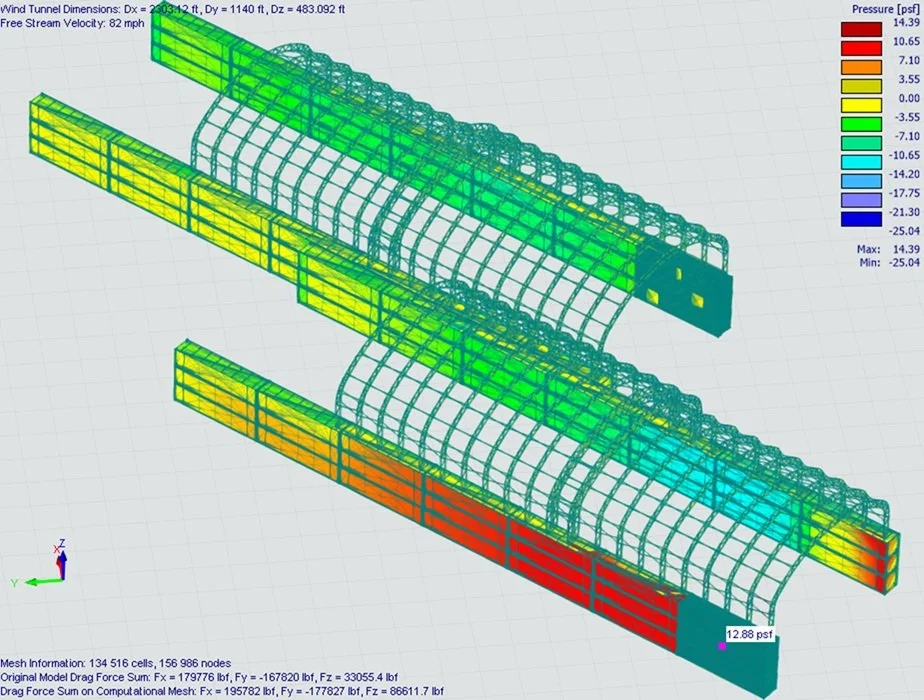
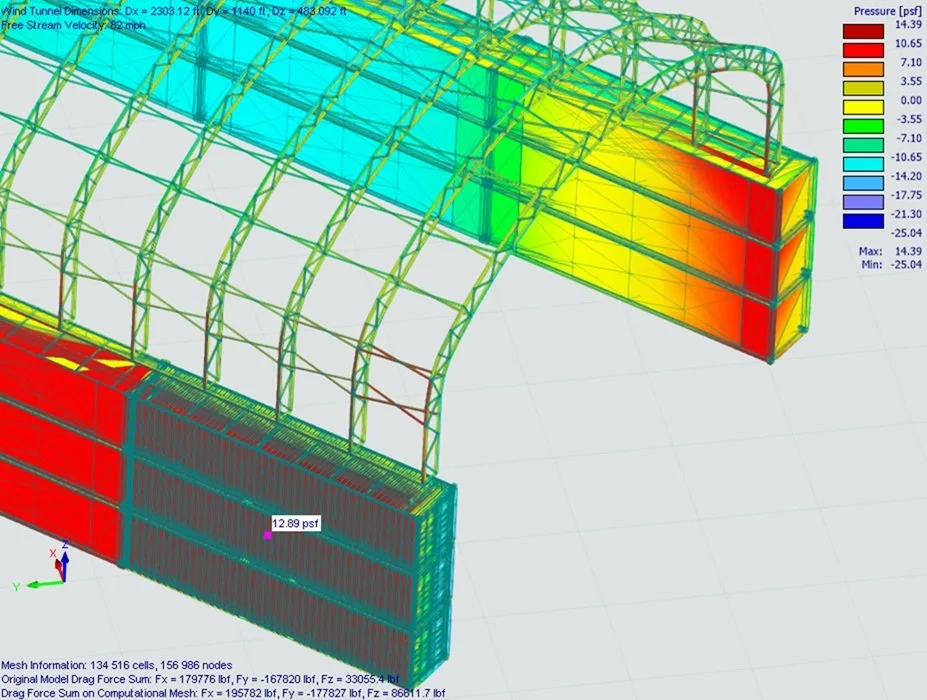
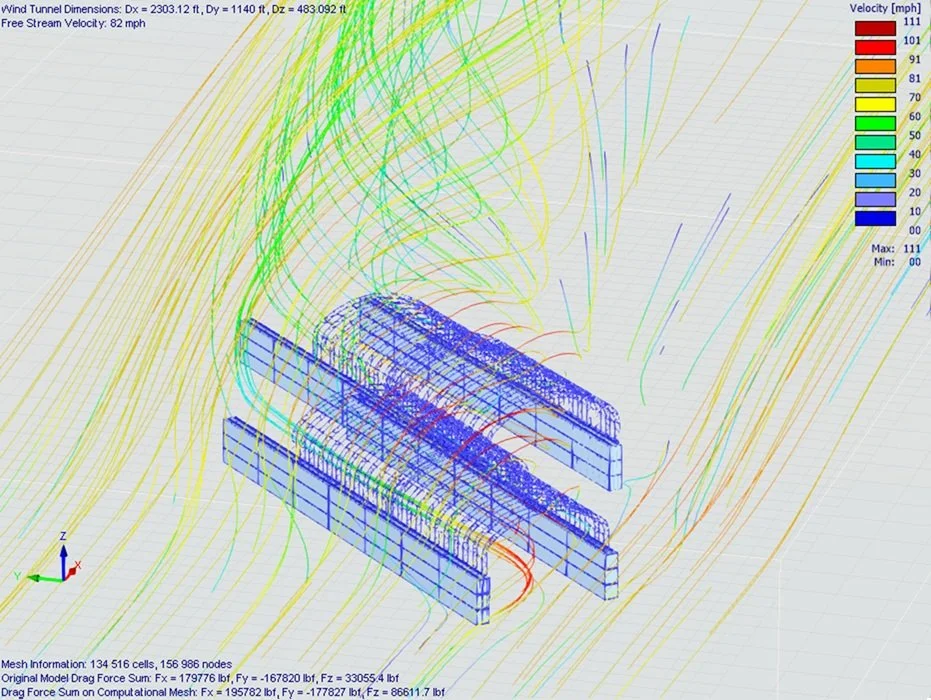
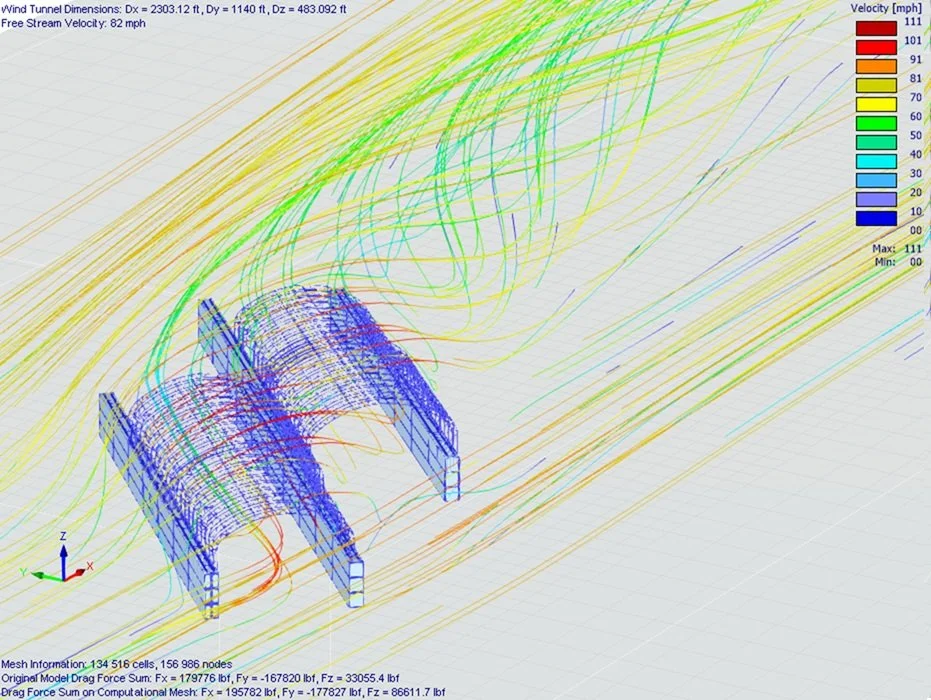
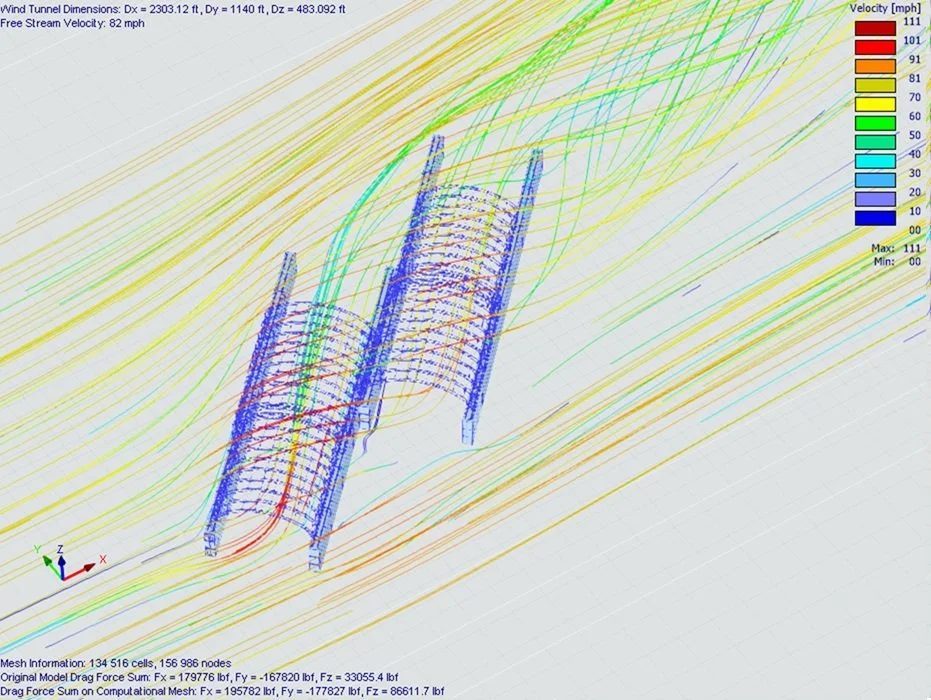
The images above show a project where standard container modules are used as primary structural elements supporting long-span arched canopy systems. Instead of acting as standalone units, the containers become part of a larger load-resisting system—working together with steel framing, foundations, and connections.
What makes this type of application challenging is not the container itself, but how it is integrated.
Openings reduce stiffness.
Stacking introduces load path shifts.
Long spans demand coordination between flexibility and strength.
In this case, the structure extends over 280 feet with multiple canopy segments, creating a system where wind effects govern much of the design. Computational wind analysis was used to study pressure distribution and flow behavior around the curved roof geometry. The results show how airflow accelerates around edges and creates localized suction and pressure zones—conditions that must be resolved through connection design and anchorage.
Rather than treating containers as rigid boxes, the design approaches them as structural components that participate in the overall system. This requires careful alignment between modeling, detailing, and constructability.
Projects like this demonstrate that ISO containers are not limited to simple stacking applications. With the right engineering approach, they can be adapted into complex, performance-driven structures that respond to real-world loading conditions.