Structural Engineering for Fabric Shade Sails and Tensile Canopy Structures
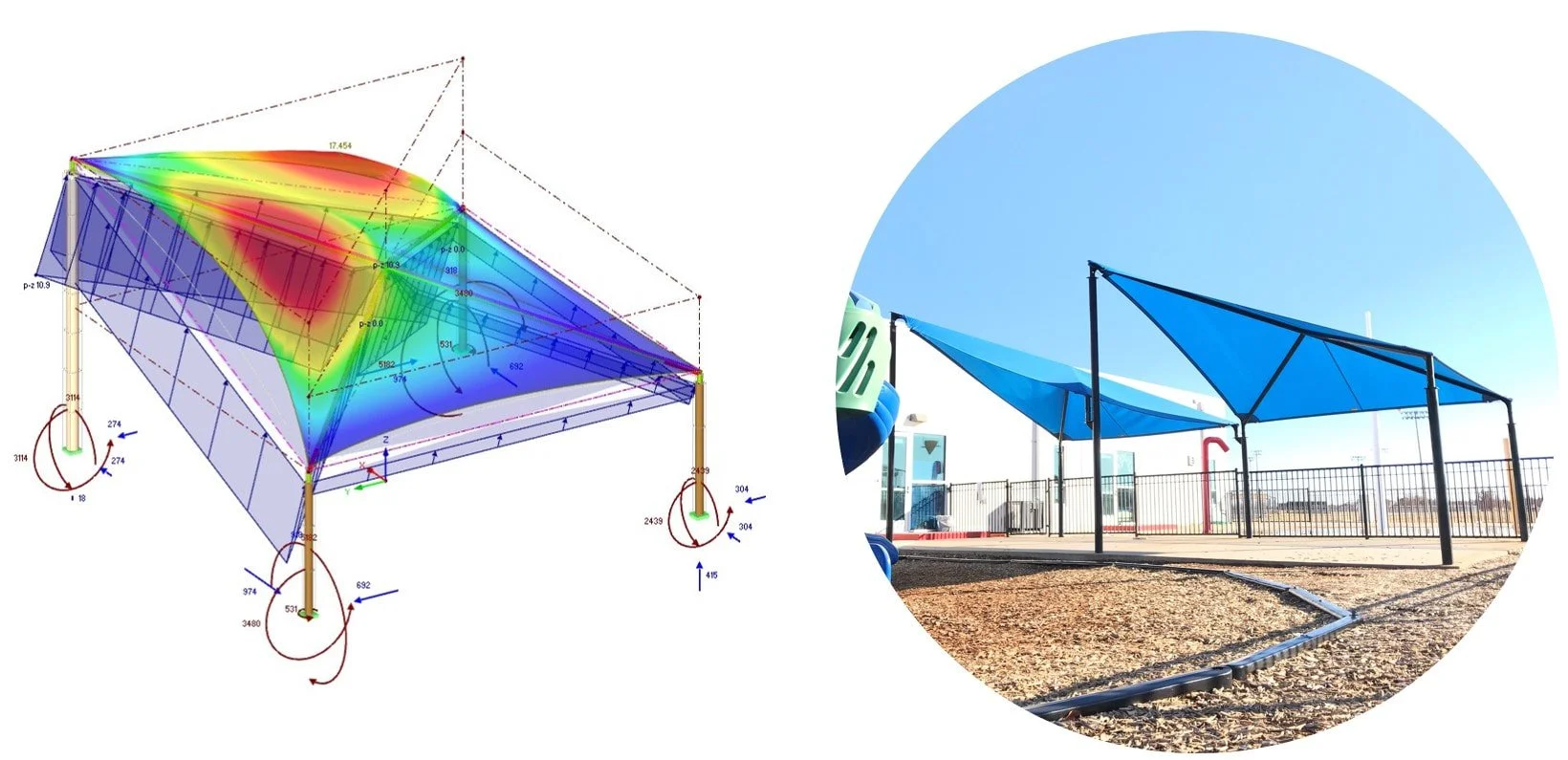
Image 1.0: Fabric shade sail canopy with structural analysis model showing support reactions and membrane load behavior.
Fabric shade sails and tensile canopy structures are commonly used at playgrounds, schools, parks, and outdoor public spaces. Although these systems look light and simple, their structural behavior is often highly specialized.
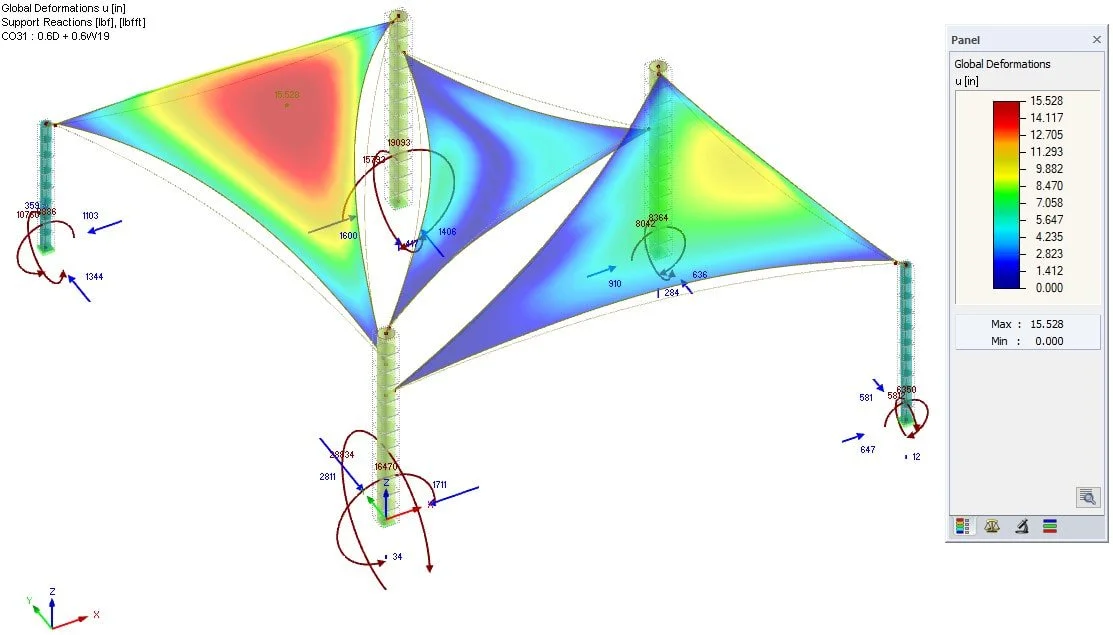
Image 2.0: Engineering model of a multi-panel tensile shade canopy illustrating deformation patterns and post reactions.
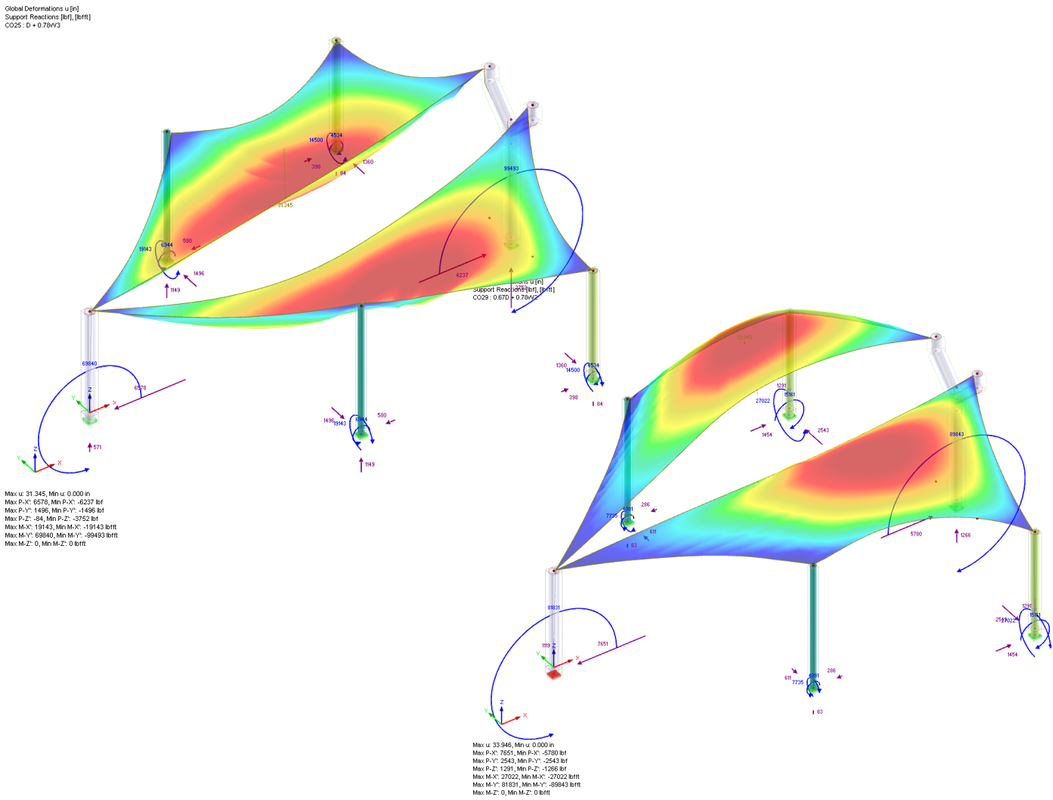
Image 3.0: Comparative structural analysis views of shade sail configurations used to evaluate force distribution and support demand.
Unlike conventional roofs, a fabric canopy depends on membrane tension, edge support, steel framing, and anchorage acting together as one system. The geometry of the canopy, including high and low corners, curved edges, and sloped fabric surfaces, can significantly influence how loads are carried. Wind uplift, fabric tension, and unbalanced support reactions are often major parts of the design.
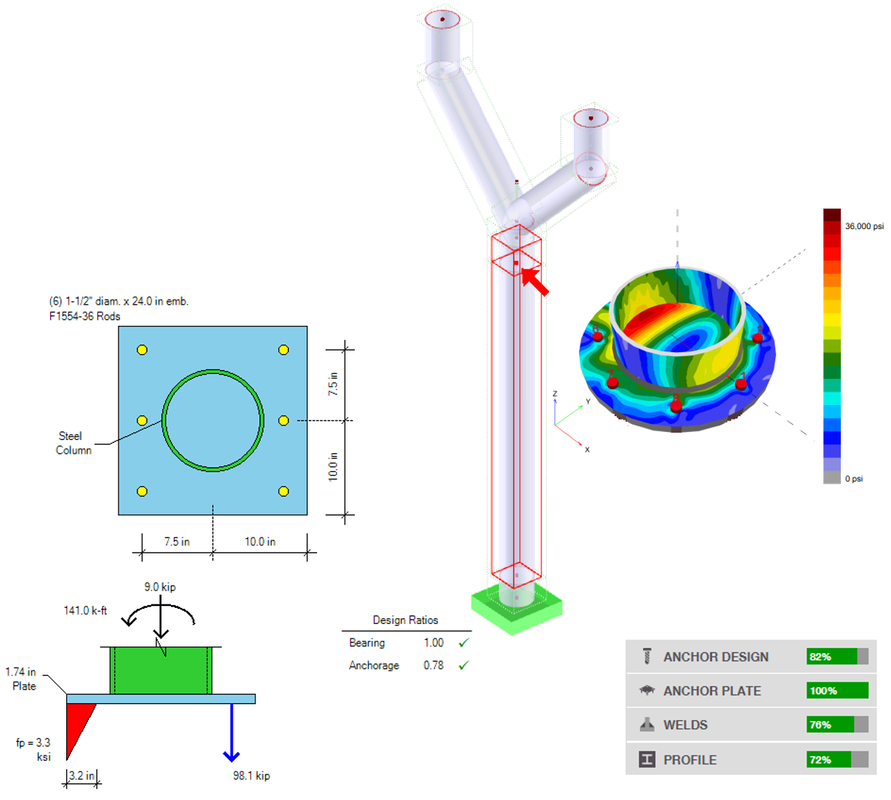
Image 4.0: Base plate, anchor rod, and steel support design review for a tensile canopy column connection.
Structural engineering for these systems typically includes analysis of the membrane-supported frame, steel posts, and support connections. Post reactions may include not only vertical loads, but also large moments, torsion, and lateral forces. Because of that, base plate design, anchor rod checks, and foundation reactions are often critical parts of the engineering scope.
Typical services may include:
Structural calculations for gravity and wind loads
Tensile canopy support reaction analysis
Steel post and frame design
Base plate and anchor rod design
Connection and weld review
Foundation reaction information
Permit support documentation
For custom canopy layouts, engineering may also include review of deflection behavior, membrane force transfer, and support stiffness to help verify that the structure performs as intended. A properly engineered fabric shade structure is not just visually clean and functional, but also coordinated from canopy surface to post base.