After Hurricane Milton, the Quiet Story Was the One Still Standing
A Tampa case that shows how structural work is often proven not by what is seen, but by what does not fail.
On October 9, 2024, Hurricane Milton pushed into Florida with serious force. In the Tampa Bay region, the storm brought record rainfall and triple-digit wind gusts, with reported gusts reaching 106 mph at Egmont Channel, 102 mph at Sarasota-Bradenton International Airport, 101 mph at Albert Whitted Airport, and 97 mph at Tampa International Airport. The same reporting noted exceptional rainfall totals, including 18.75 inches over two days at Albert Whitted and 15.6 inches in Temple Terrace.
The region saw visible signs of how severe the storm had been. News coverage showed major damage at Tropicana Field, where large portions of the roof were torn away by Milton’s winds.
When storms like this happen, public attention naturally goes to the dramatic images — the torn roof, the broken infrastructure, the places where the failure is obvious. Those are the pictures people remember.
But there is another side to the story.
Sometimes the more meaningful result is quieter. It is the structure that remains in place. The project that still looks ordinary the next morning. The system that does not need to explain itself because it kept doing what it was supposed to do.
That is what makes the post-storm images from The Motor Enclave in Tampa worth paying attention to. In the project materials provided here, the Entry Gantry & Guard House is described as having performed well during the Category III hurricane, remaining intact, and reflecting strong coordination among engineering, manufacturing, and construction execution. The same materials identify Modular Structural Consultants as structural consultant, BMarko Structures as manufacturer, and Ashmark Construction as general contractor.
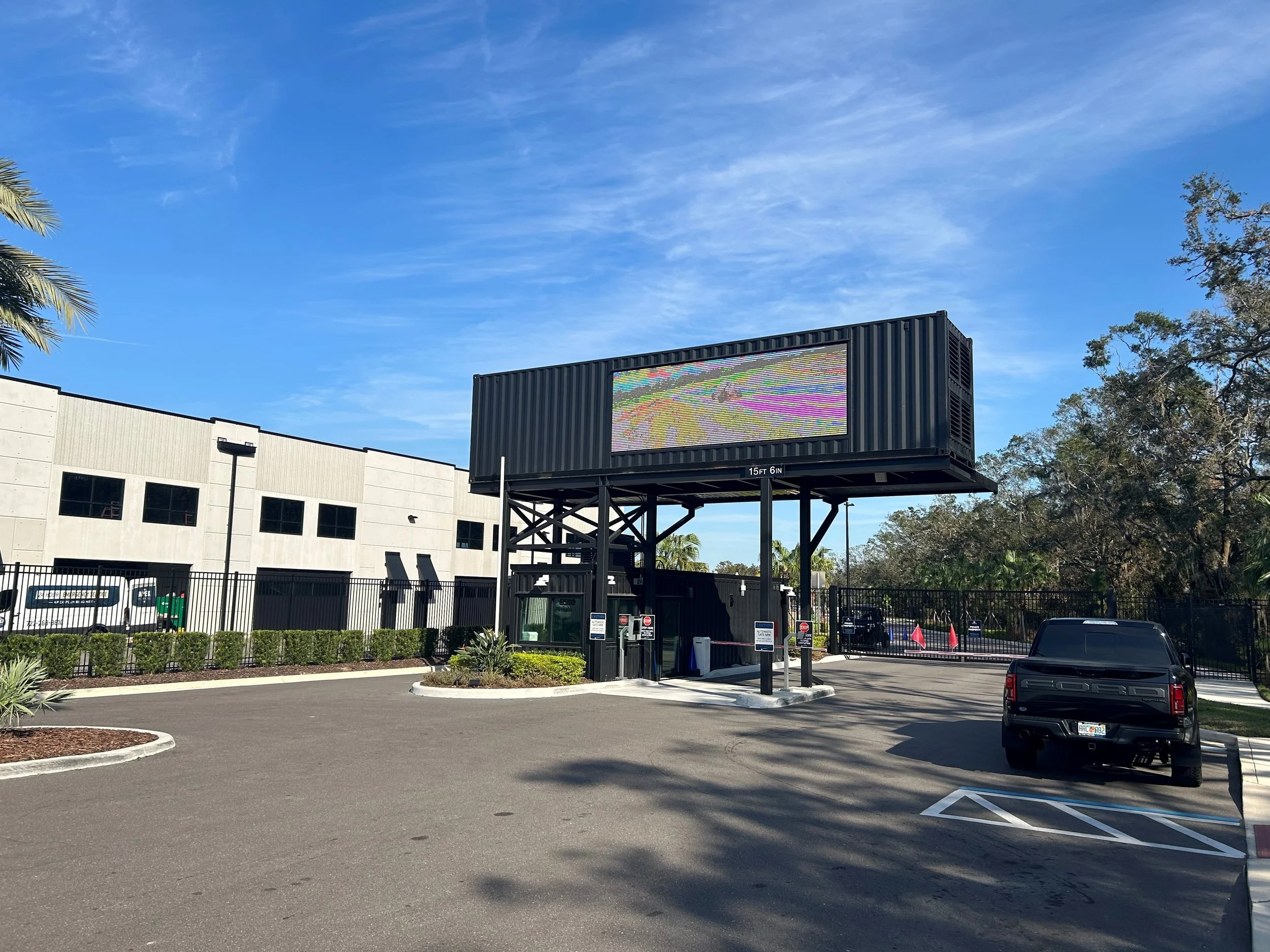
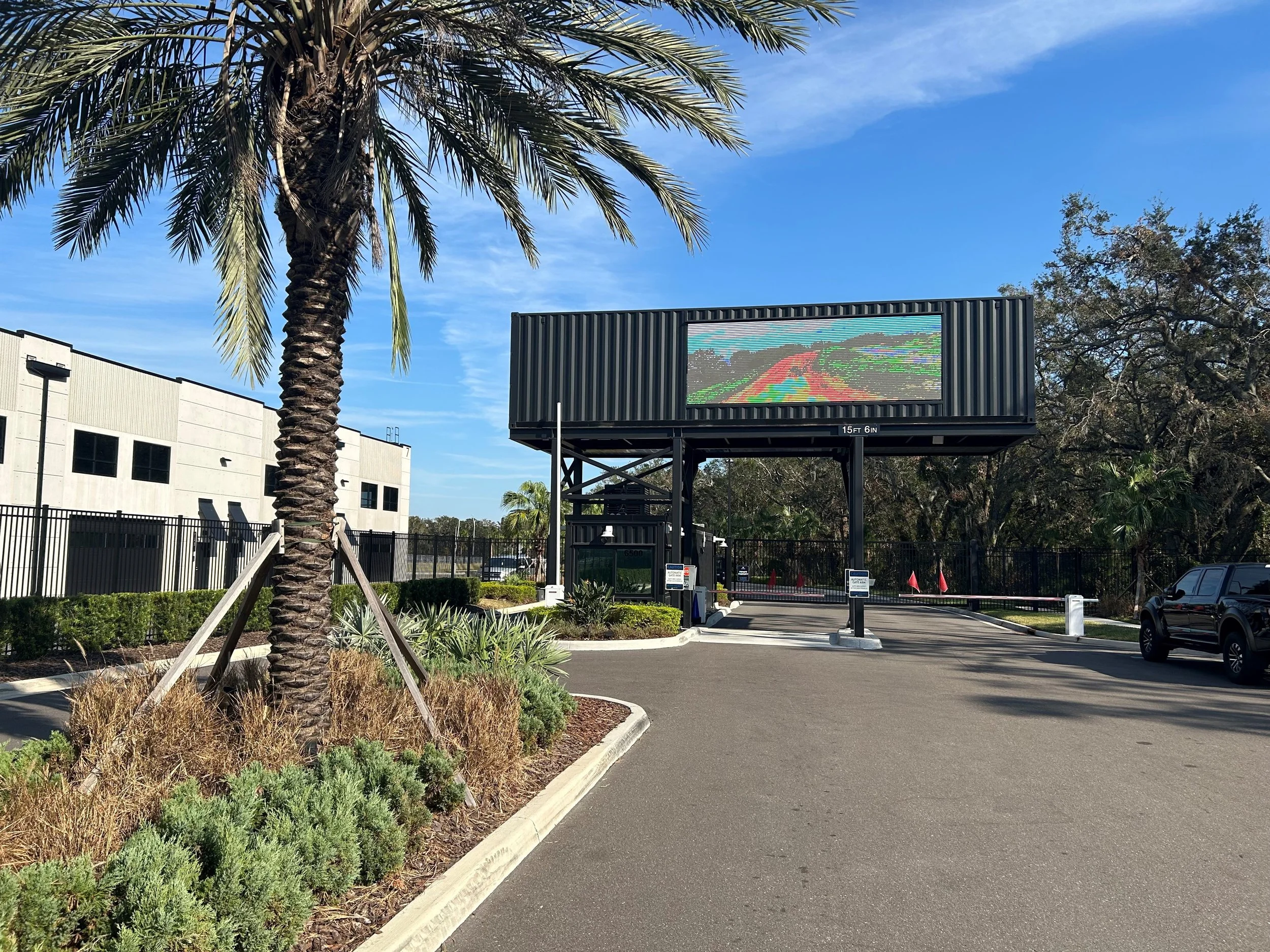
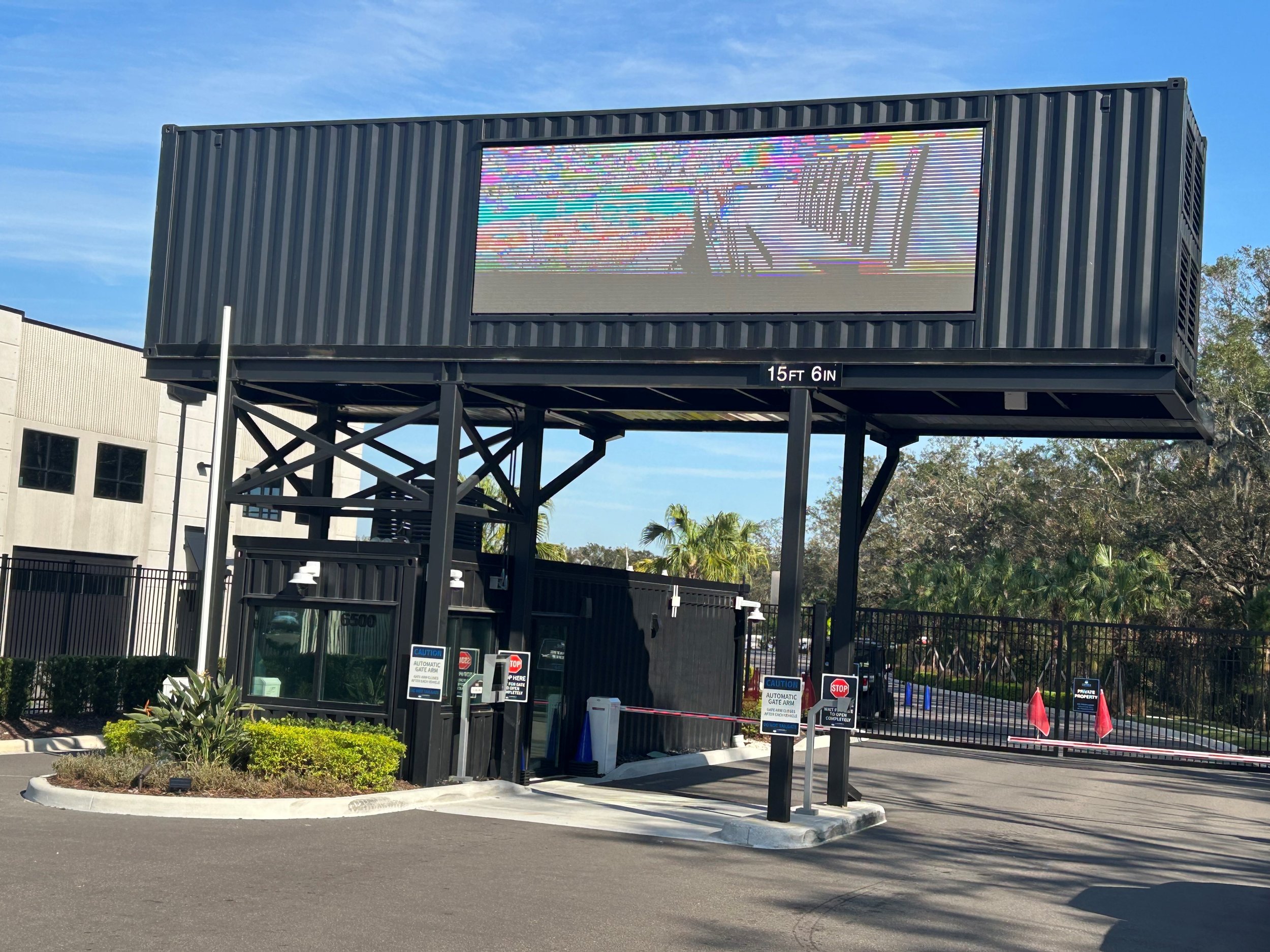
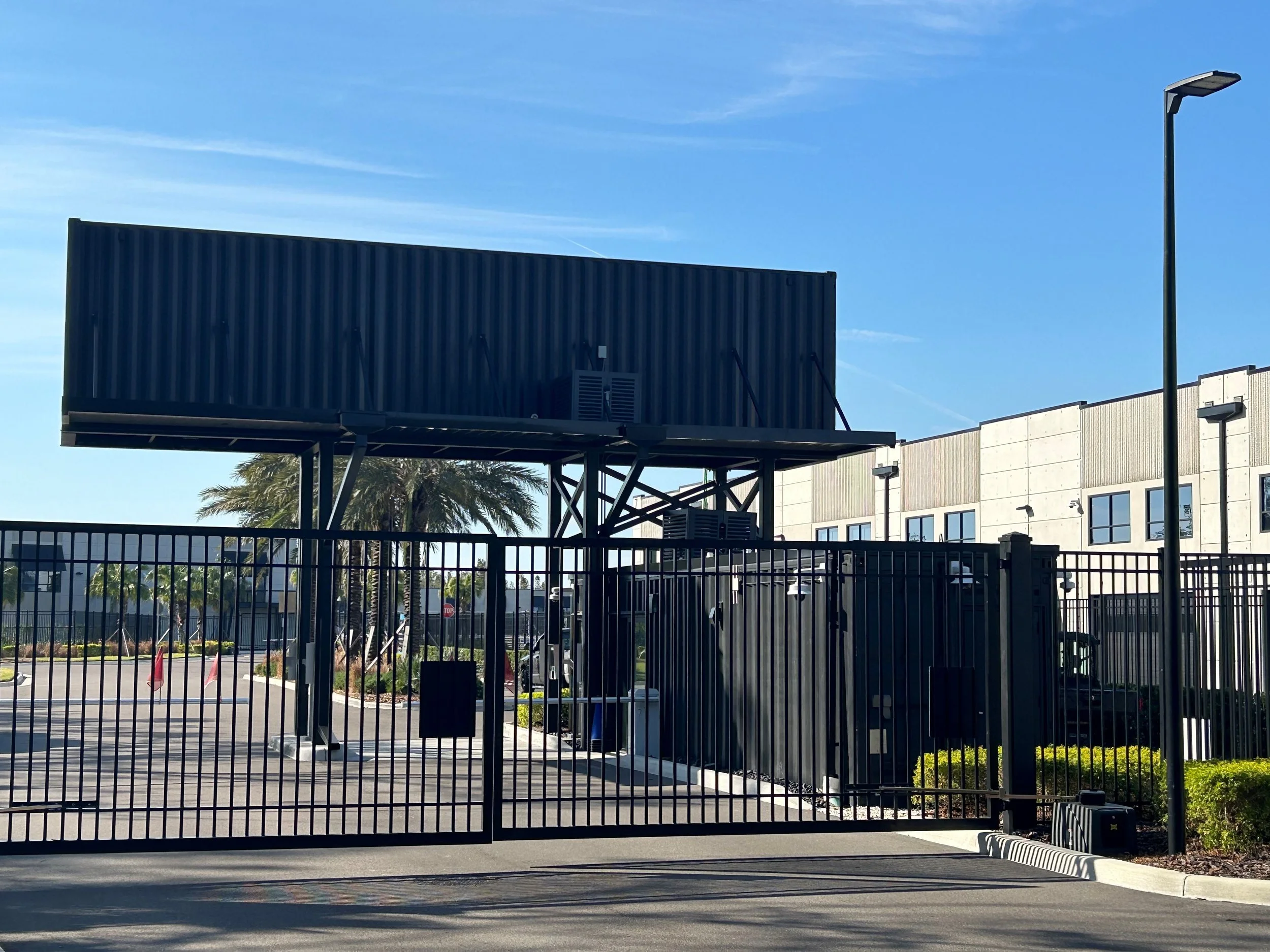
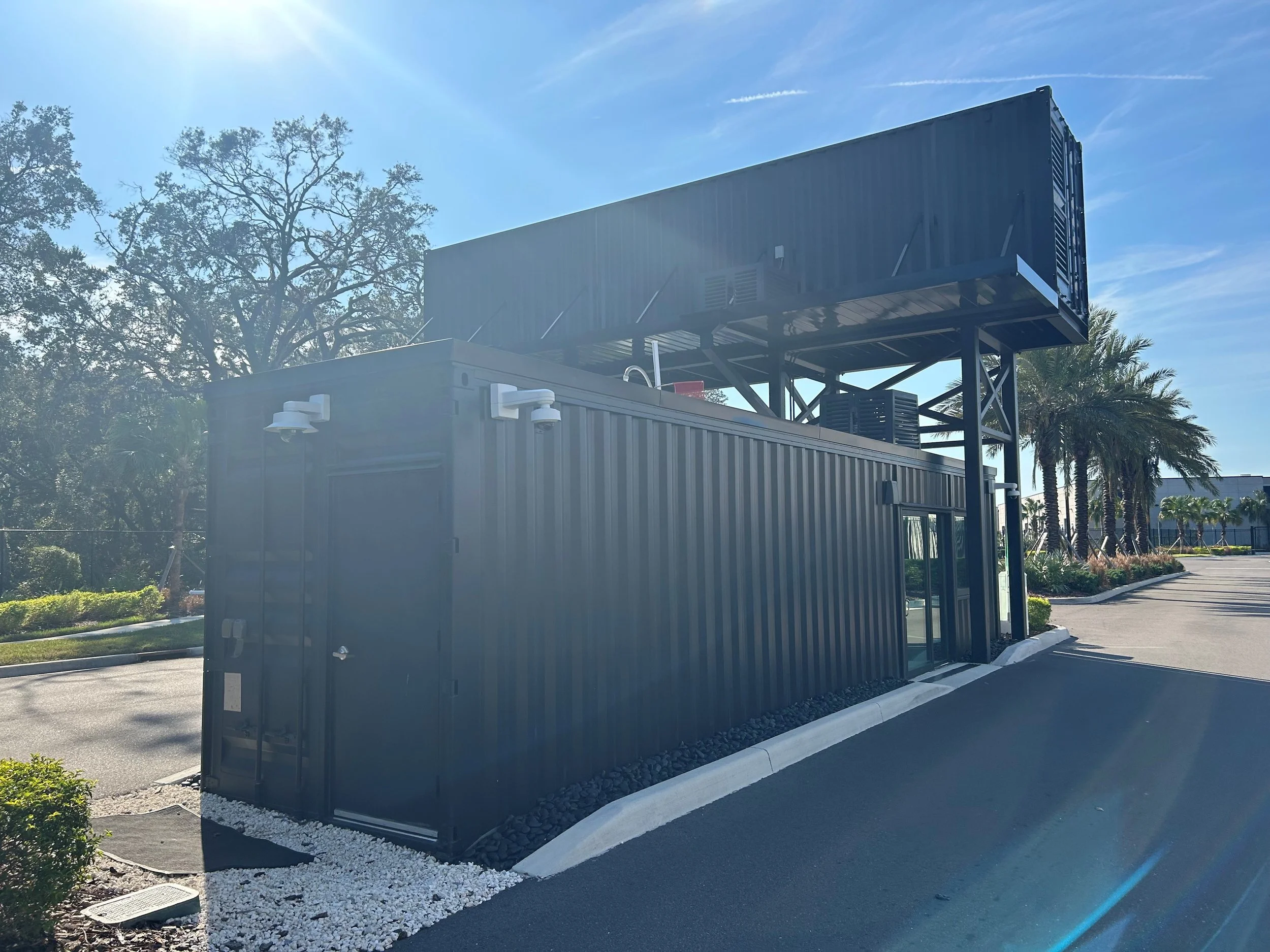
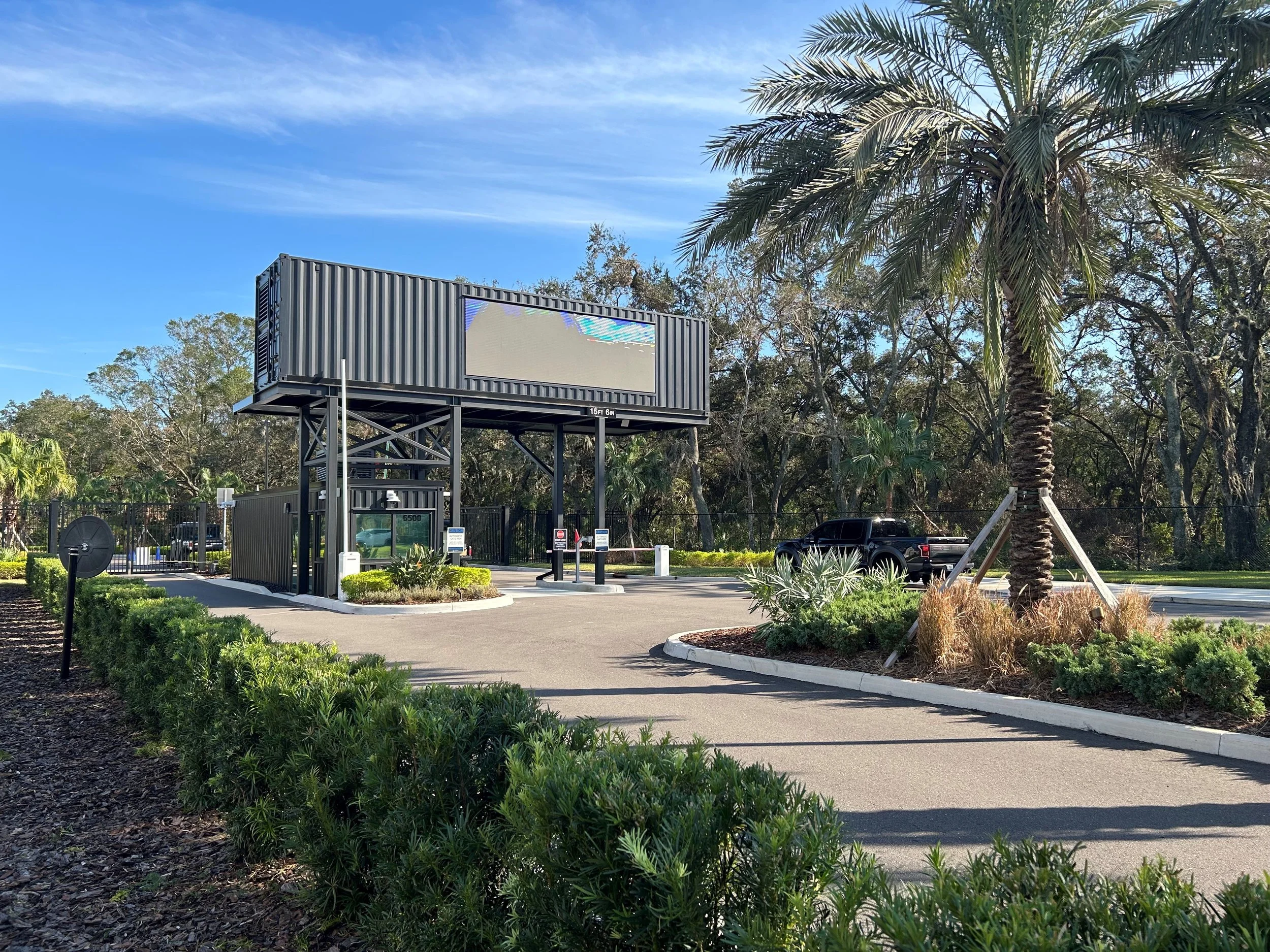
What stands out in this case is not spectacle. It is composure.
The photographs do not tell a dramatic story of emergency response or heroic repair. They show something more useful: a structure still standing in an orderly way after a disorderly event. That may sound simple, but in structural work, that is often the point. Good engineering rarely announces itself with drama. More often, it shows up as continuity — the fact that a structure remains stable, usable, and unremarkable after conditions that were anything but ordinary.
That is why this case is meaningful beyond one project.
It reminds us that structural consulting is not only about calculations, drawings, or code checks as isolated tasks. It is about preparing a structure for real conditions it may one day face. Wind demand, connection behavior, support framing, load paths, modular interfaces, anchorage, and constructability all remain mostly invisible during design. But when a storm arrives, those invisible decisions are tested all at once.
And when the result is that a project simply remains there — intact, composed, and functional — that outcome deserves attention too.
This is also a useful reminder that performance is rarely created by one discipline alone. The project deck itself points to the combined role of engineering, manufacturing, and construction execution. That matters. In modular work especially, resilience is usually not the product of one smart detail in isolation. It is the result of alignment: design that understands fabrication, fabrication that respects structural intent, and installation that carries the concept properly into the field.
So while Hurricane Milton produced many images of failure across the region, this project offers a different kind of image. Not a sensational one. Not a loud one. Just a clear one.
A structure was exposed to a major storm in Tampa.
The storm passed.
And the structure was still there.
For structural engineering, that is often the most honest kind of story.